A line of AI-powered fitness machines
It is not gym, it is science
Context
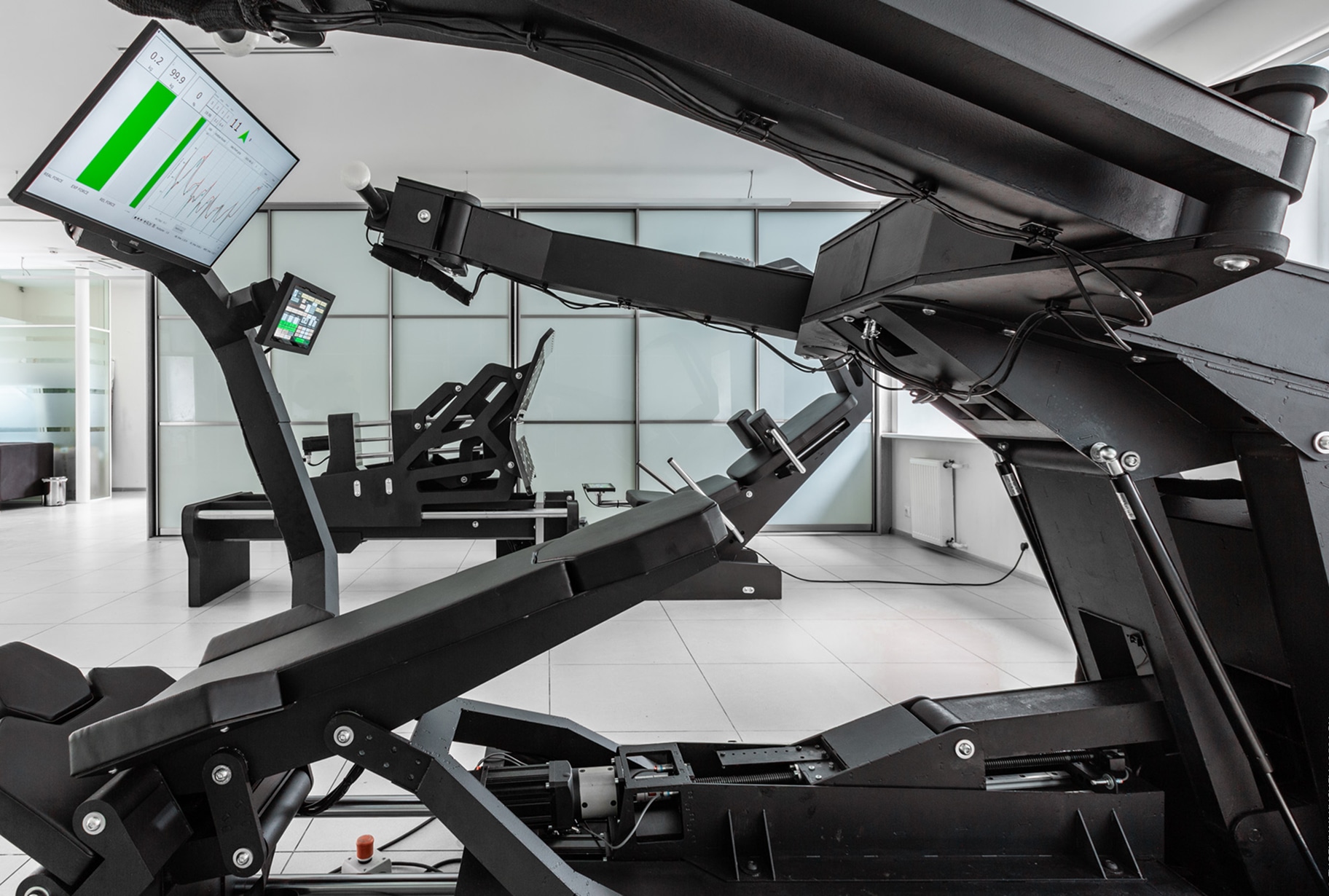
I joined X Machine at an early stage. The startup already had one working machine and had raised funding, but the team needed to turn that one-off prototype into a full product line and bring the device into a commercial gym with real clients. My role had two sides. As a design engineer and industrial designer I owned new machines end-to-end — from sketch to a serial-ready unit. As Team Lead of the engineering group I set up processes, ran the team and took part in strategic product planning.

X Machine
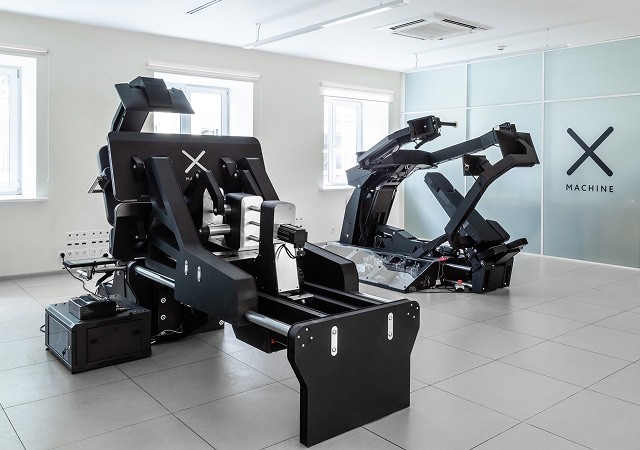
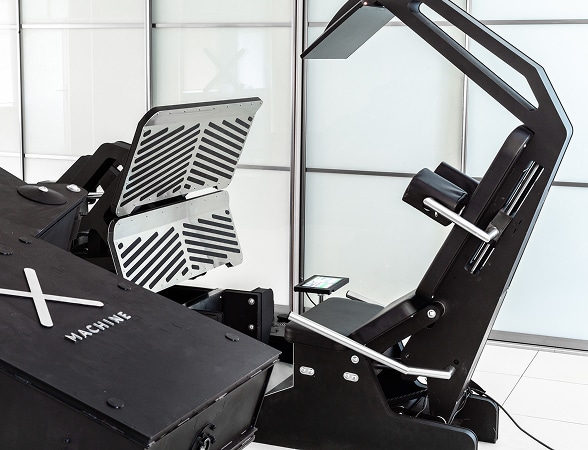
Role: Inventor, Industrial designer, Team Lead Engineer Product: a line of AI-powered fitness machines Scope: sketches, kinematics, design, prototyping, 3D modelling, manufacturing, iterative approach, testing, team leadership
What makes X Machine special
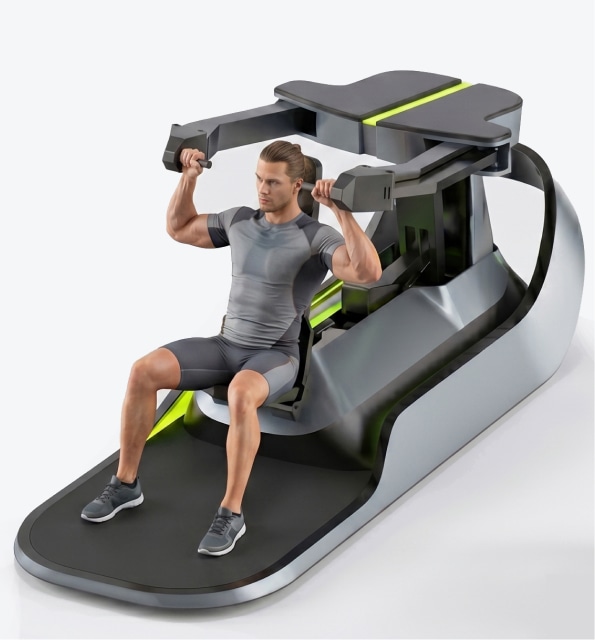
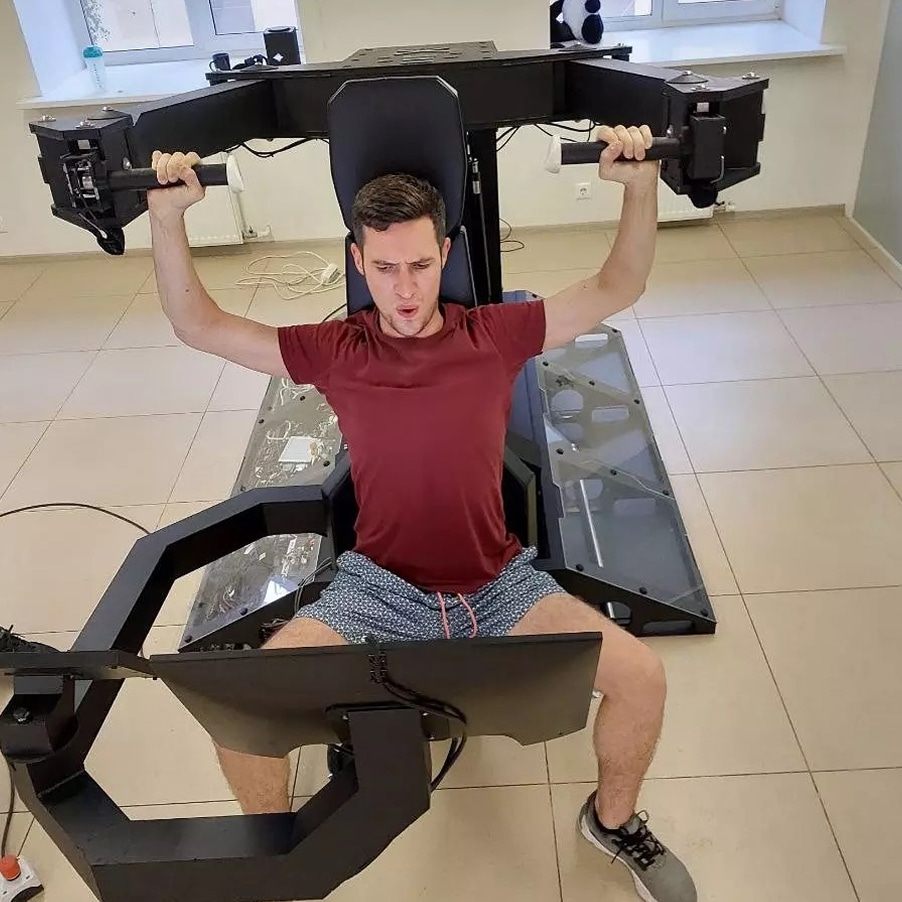
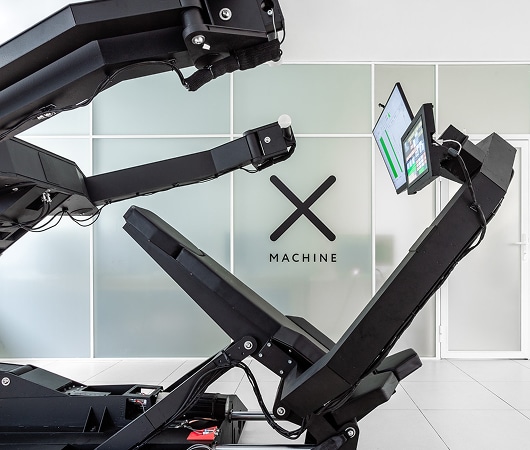
In a regular machine, resistance comes from gravity — iron plates you load by hand. In X Machine it's generated by an electric motor, and an AI controls the load. The system measures the athlete's force fifty times a second: if the person can't handle the weight, the AI releases it instantly — physically dropping a barbell becomes impossible. That lets you train at your limit without a spotter and actually reach the ceiling of what you can do. The AI also adapts the load to the phase of the movement. On the eccentric phase a muscle handles more weight than on the main motion, and X Machine adds resistance exactly where the muscle is capable of it. The workout becomes more effective in the same amount of time.
The process: from sketch to metal
Every machine went through the same path, and I led each one from the first kinematic sketch to the final metal unit.
Kinematics
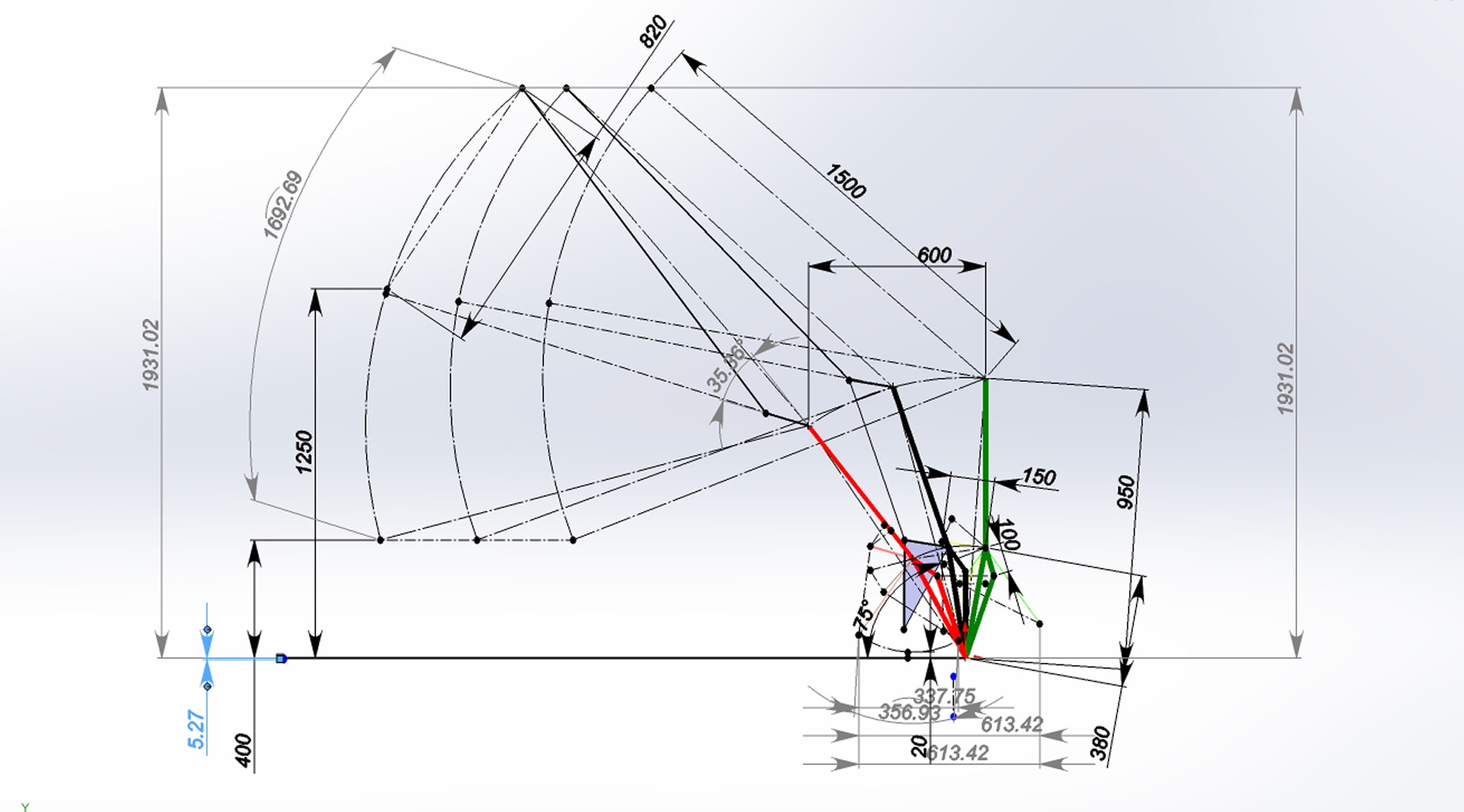
The foundation of the whole machine. At this stage I worked out which muscle groups the machine should engage, the movement trajectories and where the load points sit. I calculated angles and amplitudes, static load at the extreme points and the dynamics of the motion — all before going into 3D.
3D design (SolidWorks)
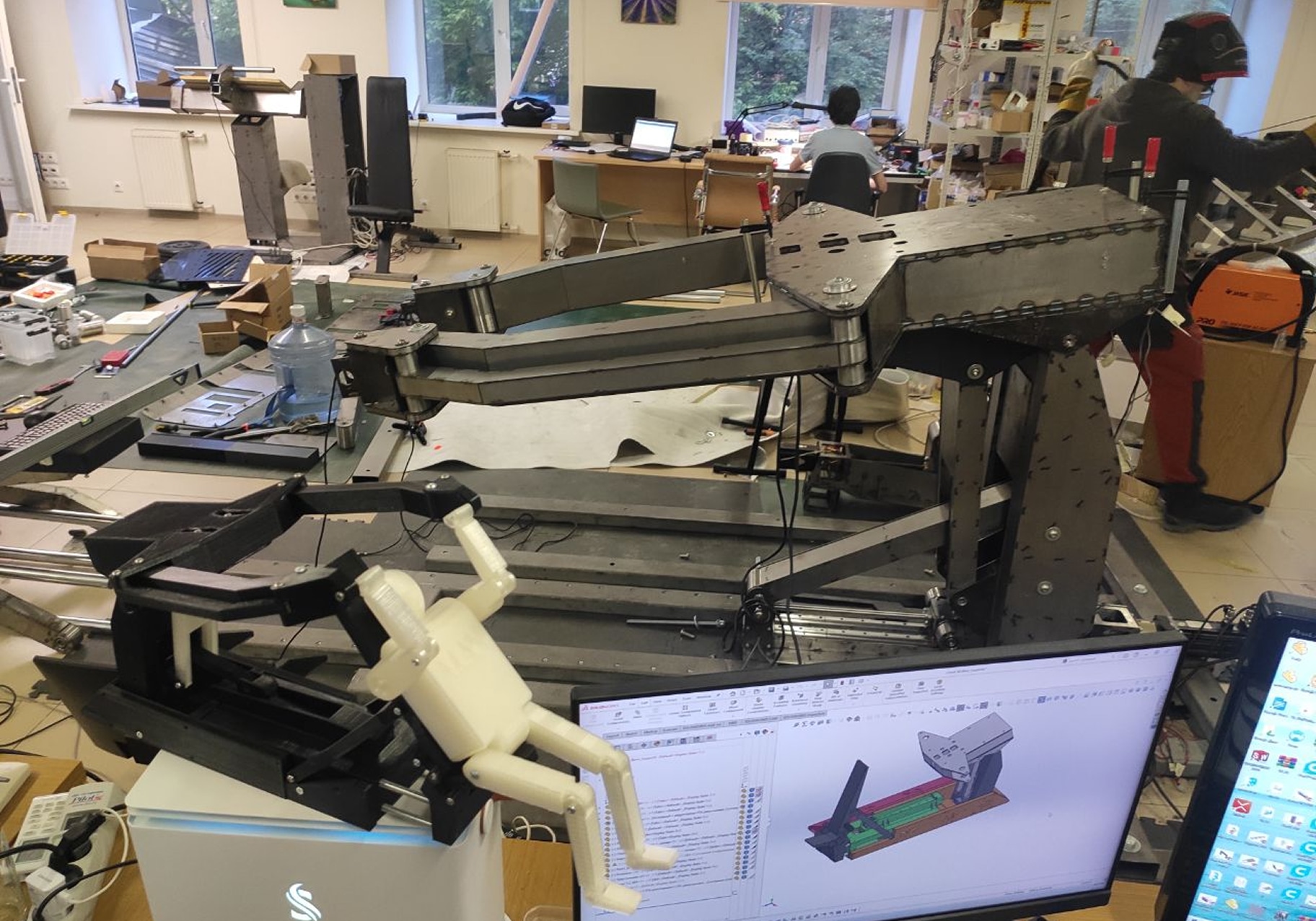
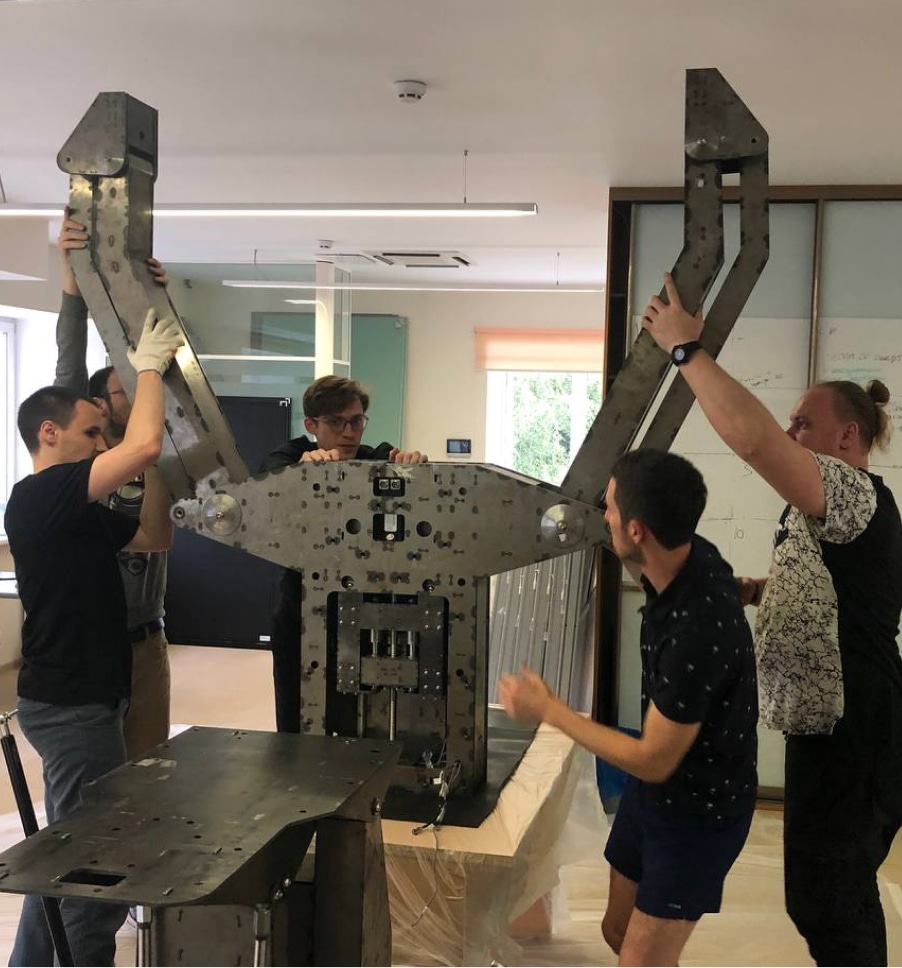
Because the machines are technically complex, we built the 3D in several layers. First we grew primitives — cubes and cylinders — around the kinematic, showing footprint and layout. Next came form-finding and trimming the excess: primitives turned into proper components, joints and mounts were detailed. The final layer accounted for manufacturing: what goes to the lathe, what to laser cutting, what to 3D printing. This kept complexity manageable and avoided wasting time detailing parts that might disappear at the next iteration.
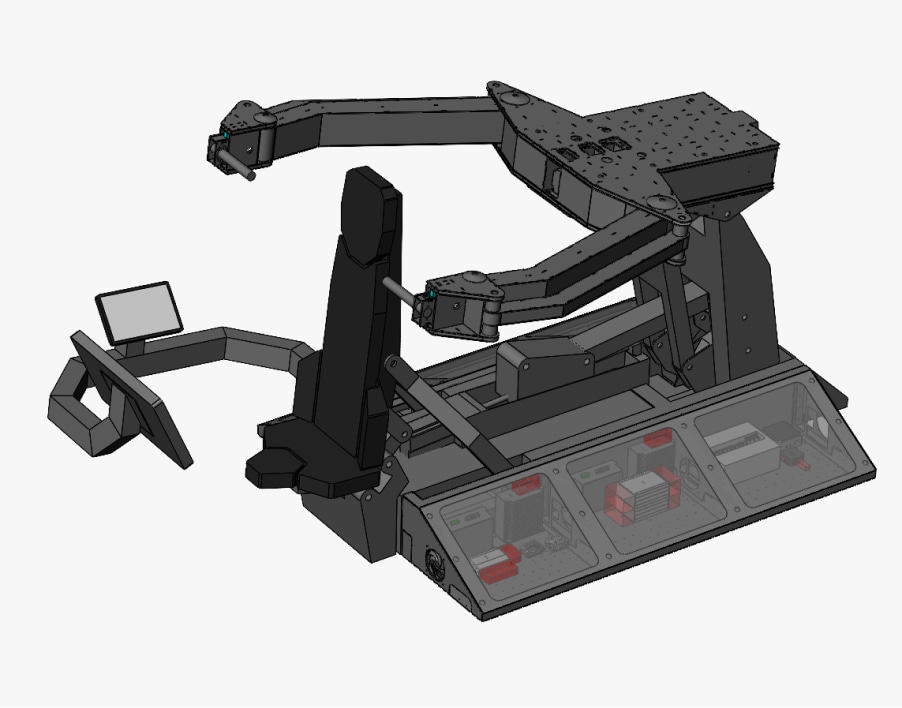
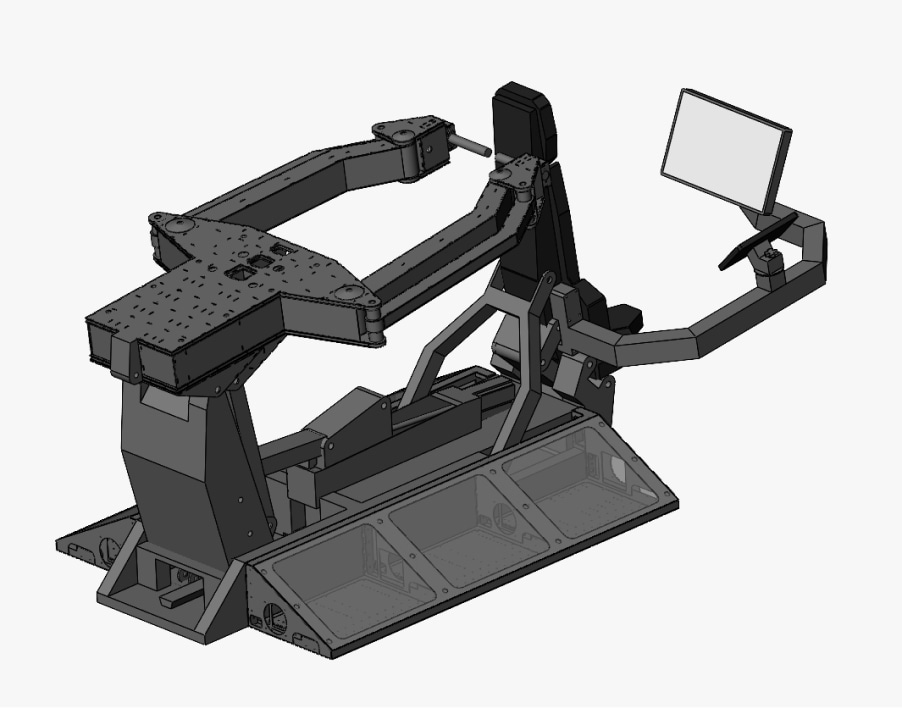
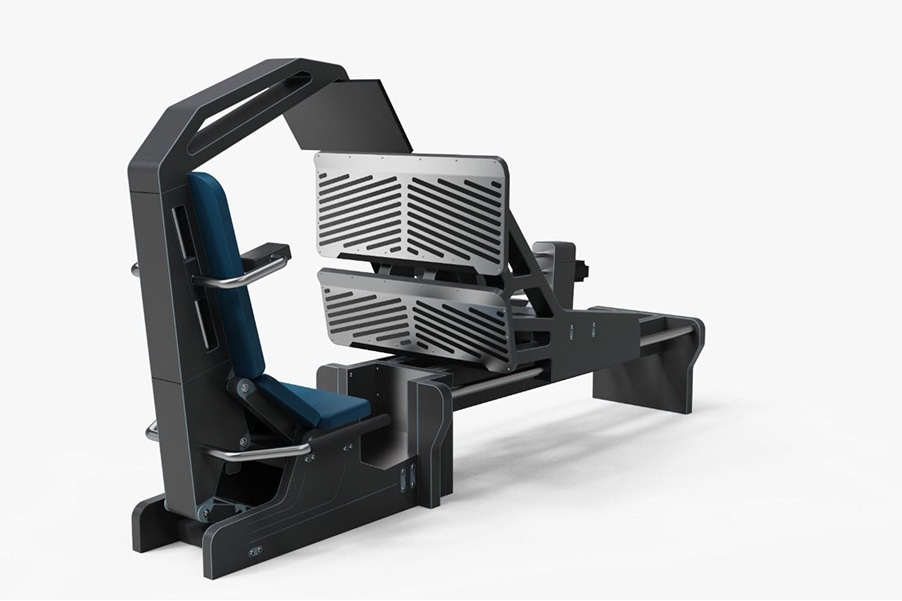
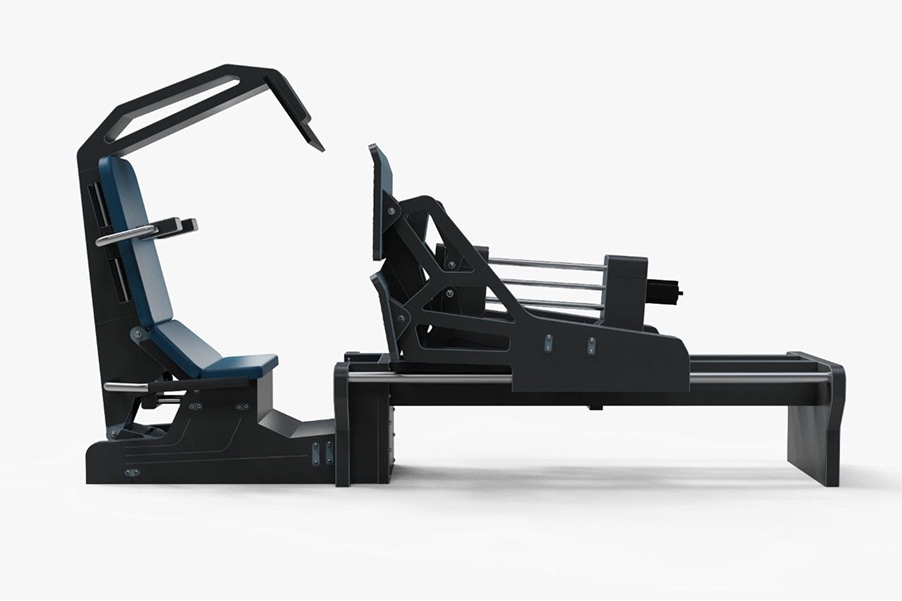
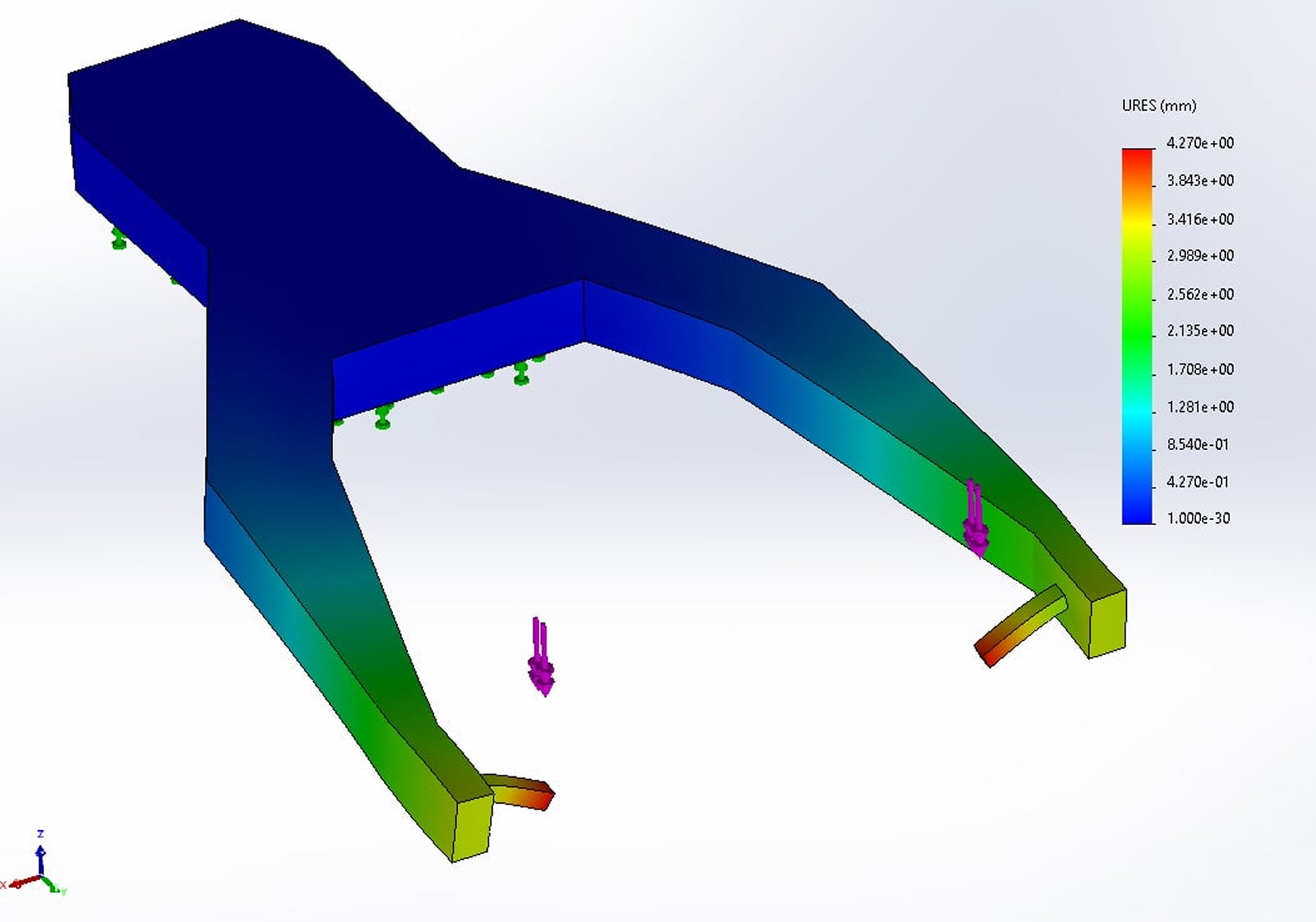
Load analysis in SW Simulation
At this stage we tested the structure for strength before ordering any metal. The machine works with serious forces — an athlete can develop hundreds of kilograms, and the motor adds its own resistance on top. So key joints went through load analysis: where stress concentrates, which cross-sections will hold, where to reinforce. It let us catch weak spots on the model rather than on a finished unit, saving weeks of work and the cost of materials.
Prototyping in miniature
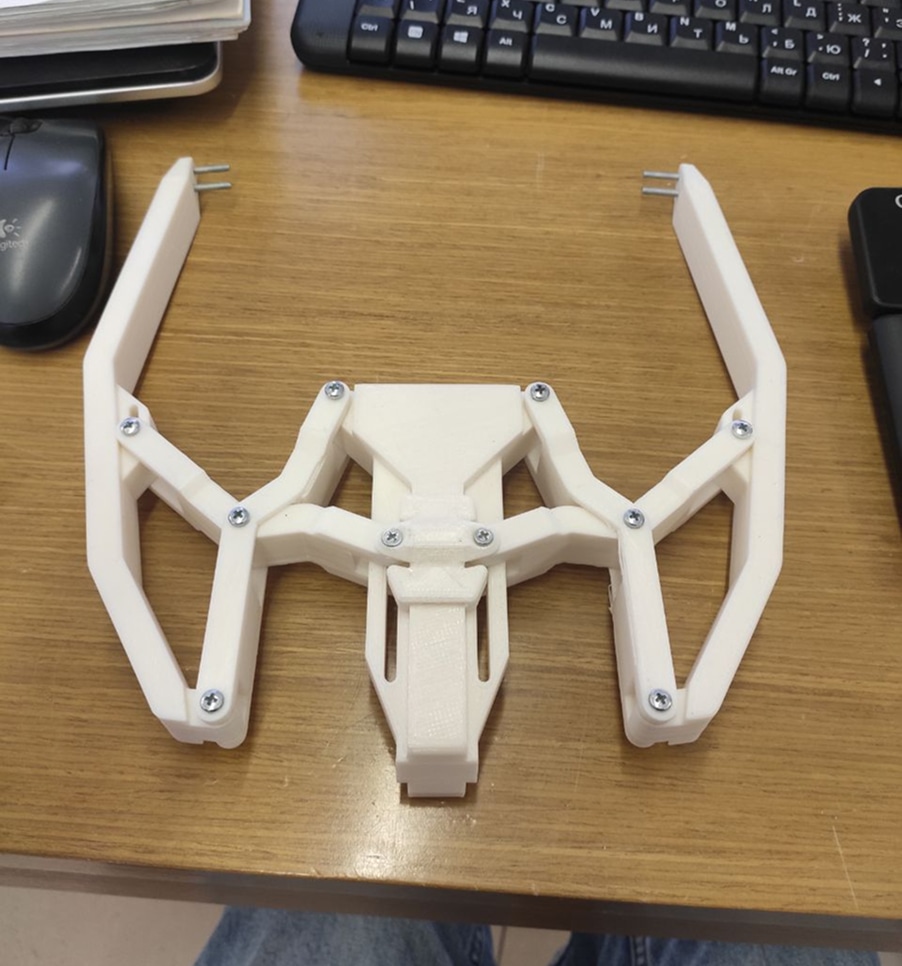
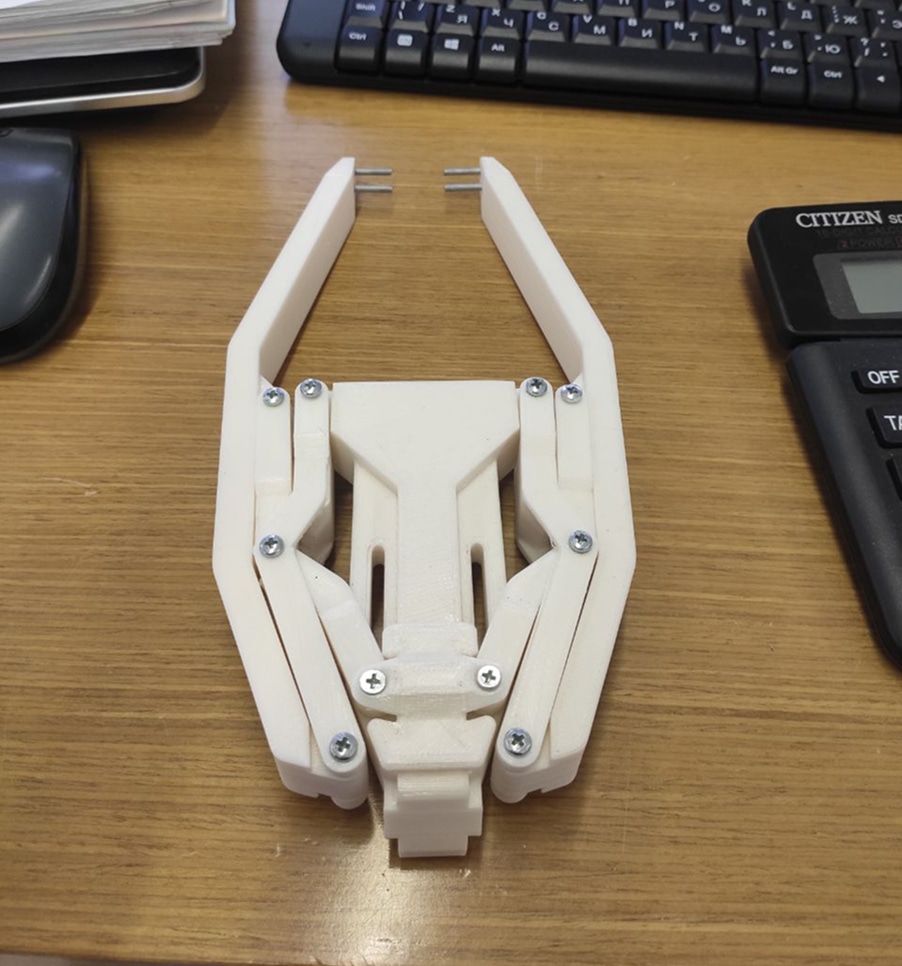
Certain details needed extra attention, and for them we ran several rounds of 3D printing, validating each version before moving on. Printing costs pennies compared to metal, so mistakes and reworks at this stage were cheap and fast. It let us validate ergonomics, component fit and the behaviour of complex joints in the flesh — hold a part in your hand, assemble a mock-up, see whether it's comfortable for the user and whether everything lines up geometrically.
Iterative approach
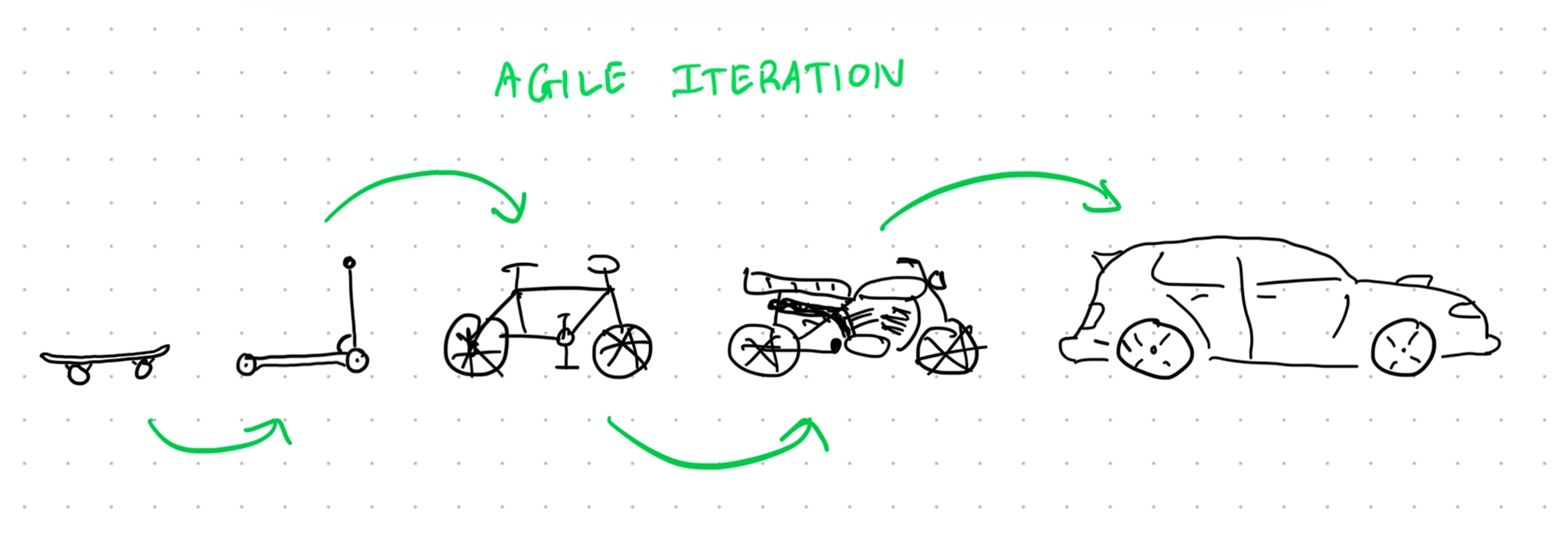
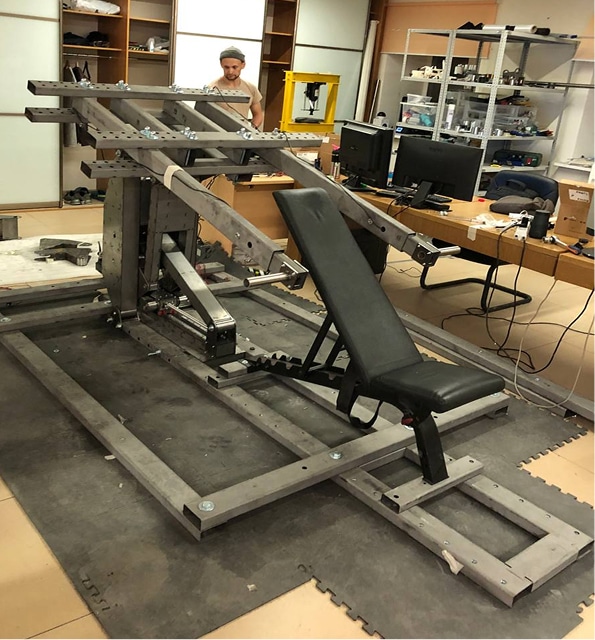
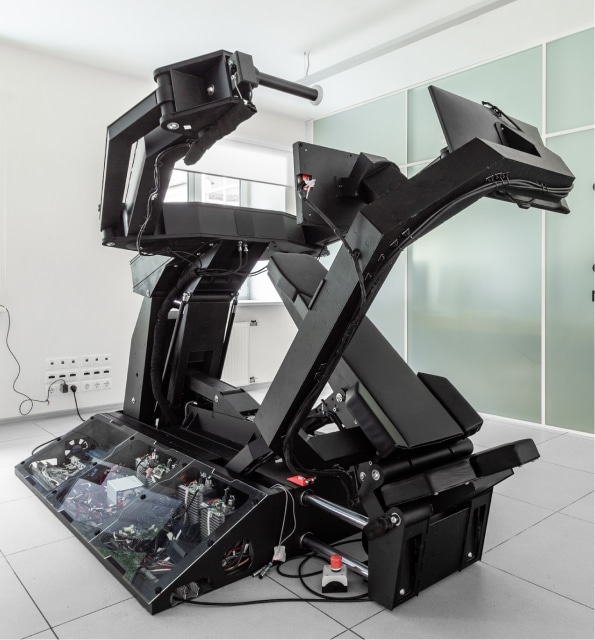
A principle we applied constantly: ramp up complexity step by step, validating hypotheses on each one, instead of trying to land the final version in one shot. The earliest versions were as primitive, cheap and fast as possible — built to answer our questions, run tests, sync with the team and keep moving.
Challenges and engineering decisions
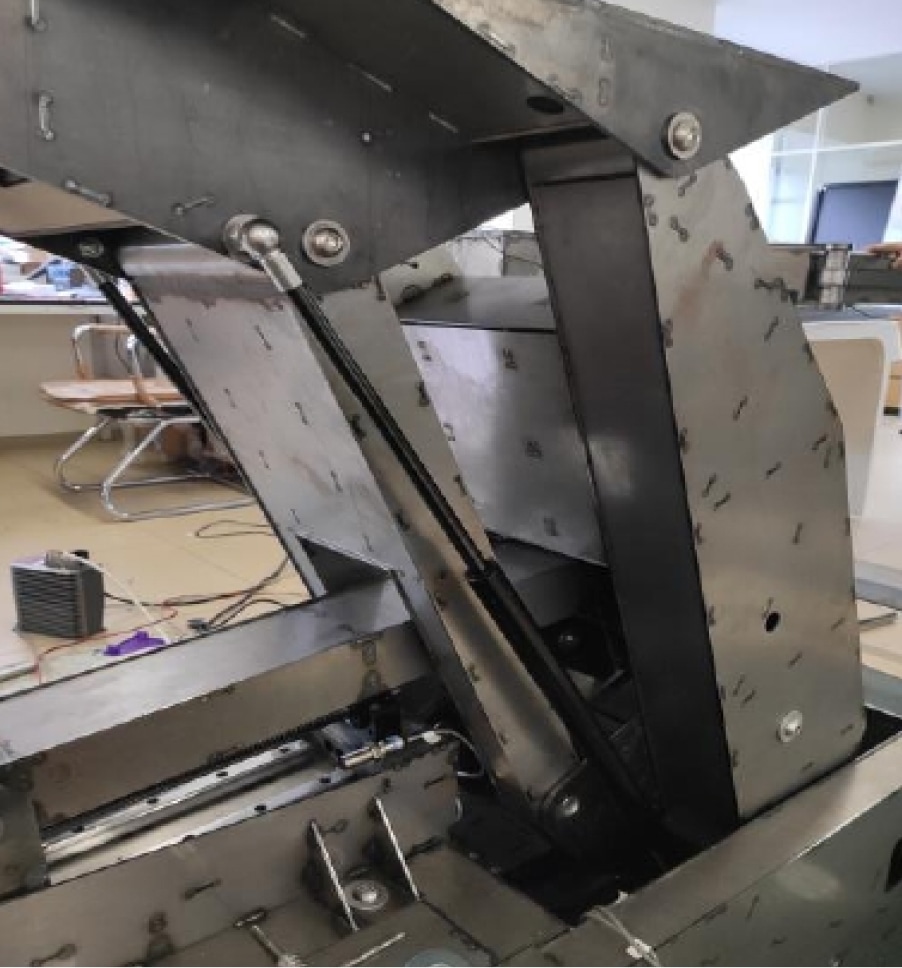
In 3D everything looks fine right up until you assemble it in metal. On one of the machines the top turned out noticeably heavier than we'd planned, and the balance went off. We solved it with a damper — added a part that levelled the structure out and kept the motion smooth. A good example of why an iterative approach matters: we had to redo a single part, not the whole machine.
Testing
Testing was a research process embedded into development. Each level produced its own type of data, and together they shaped the full picture of the product.
Solo testing
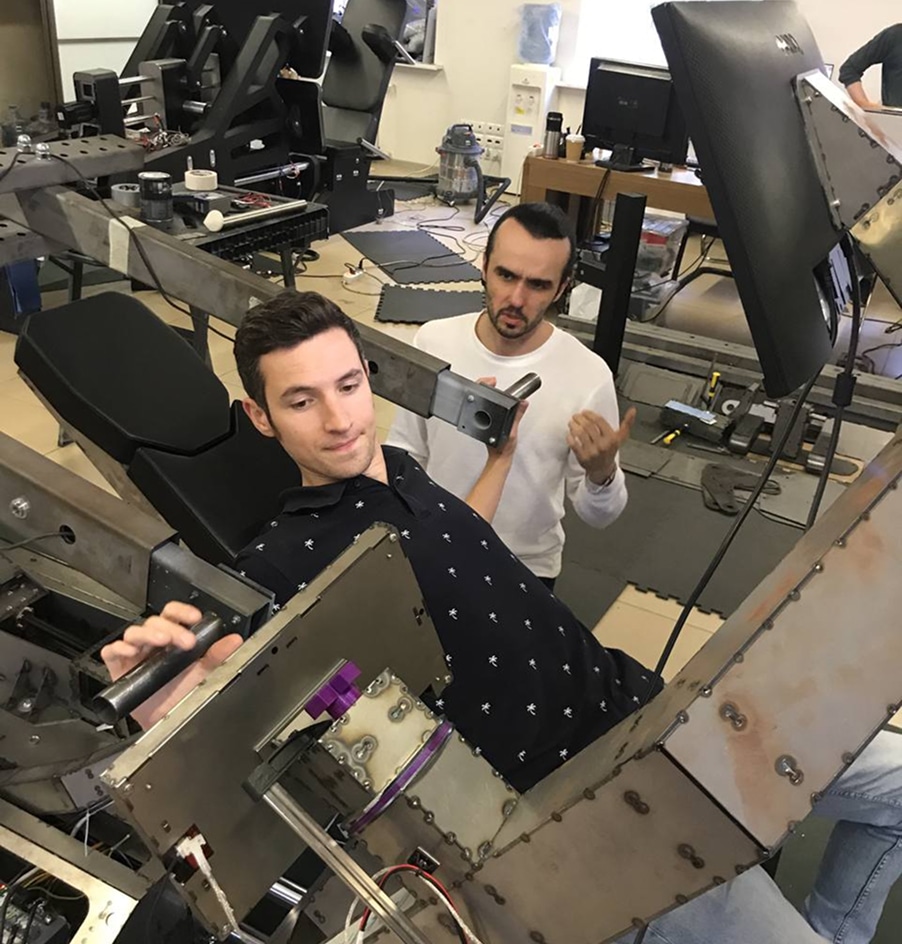
Every assembled unit I tested myself: whether the joints work, whether the motion runs smoothly, whether the motor and AI respond correctly. At this stage we caught the obvious issues before the machine ever met anyone else.
Testing with athletes
Pros set the upper ceiling of loads and stressed the system at its limit. That's critical for the AI — it has to handle situations where the athlete pushes to total failure. In parallel we collected feedback from people who clearly feel the difference between right and wrong biomechanics.
Testing with regular users
In the commercial gym the machines were used by people with no athletic background. That's where it became clear whether the interface is understandable cold, and how the product feels for someone seeing it for the first time. These tests highlighted points to improve in UX and ergonomics.
Interface design
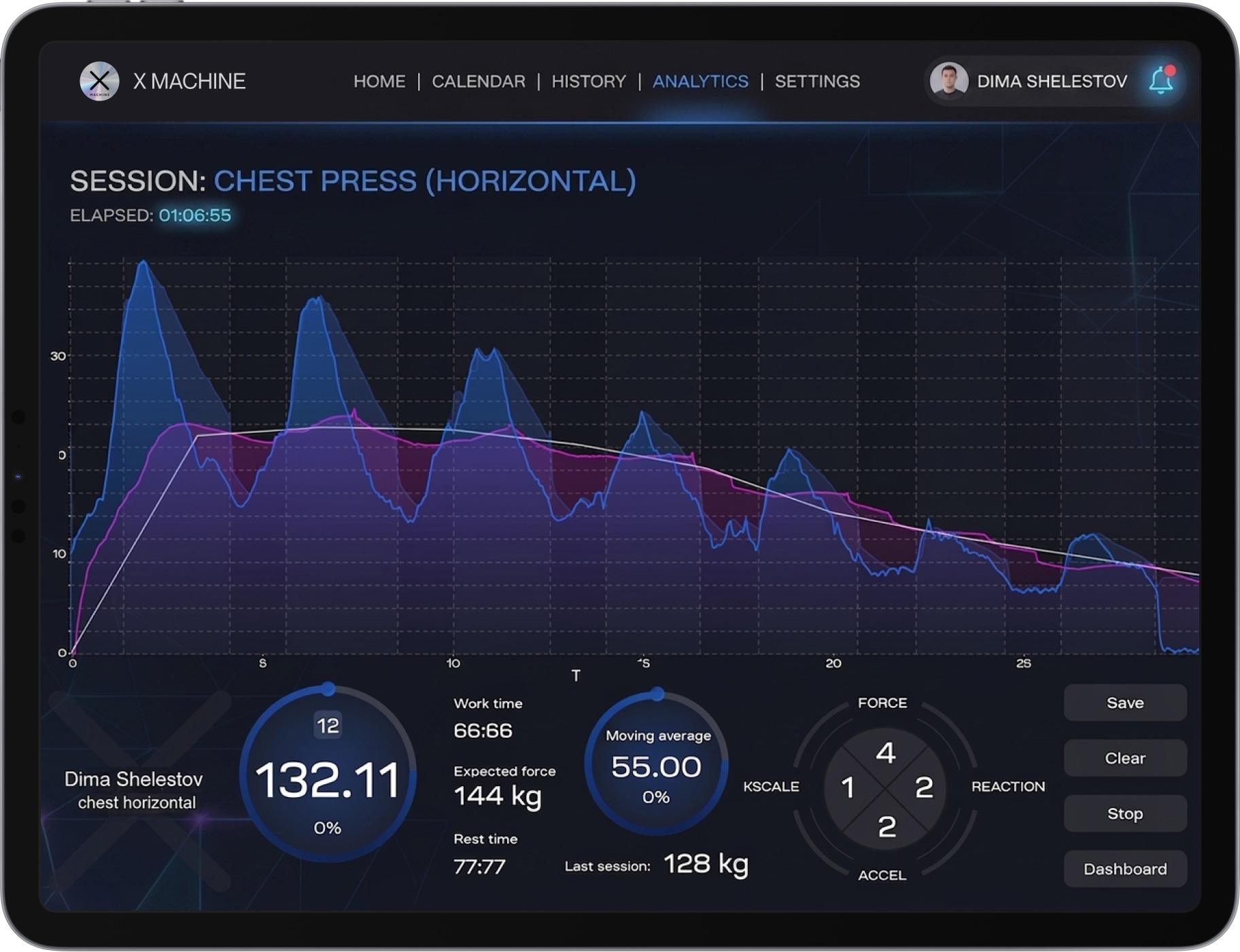
Alongside the hardware, I worked on the machines' interface design. It was my first serious experience of UX/UI inside a hardware product — how the user reads their data in real time, how to show progress, load and the way the system adapts. It was after X Machine that I realised I want to keep working at the intersection of hardware and software — that's the zone where engineering thinking and product instinct work together, and it turned out to be the place that fits me best.
Team
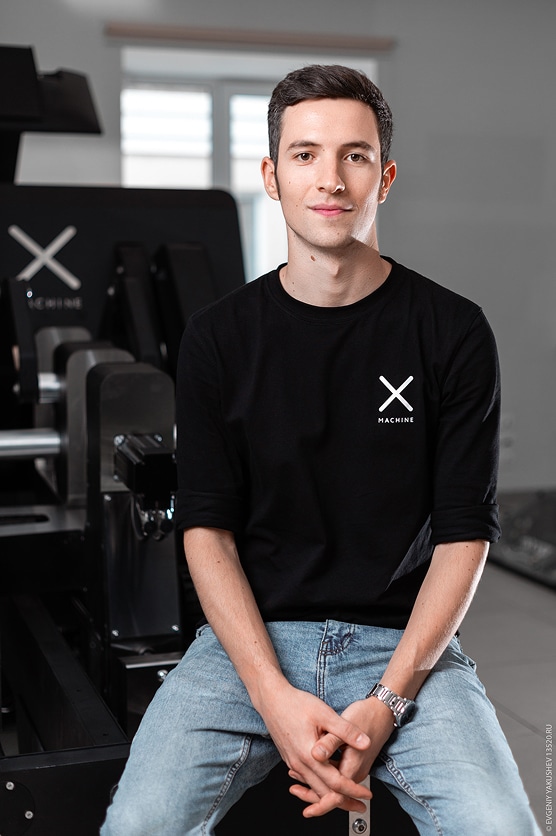
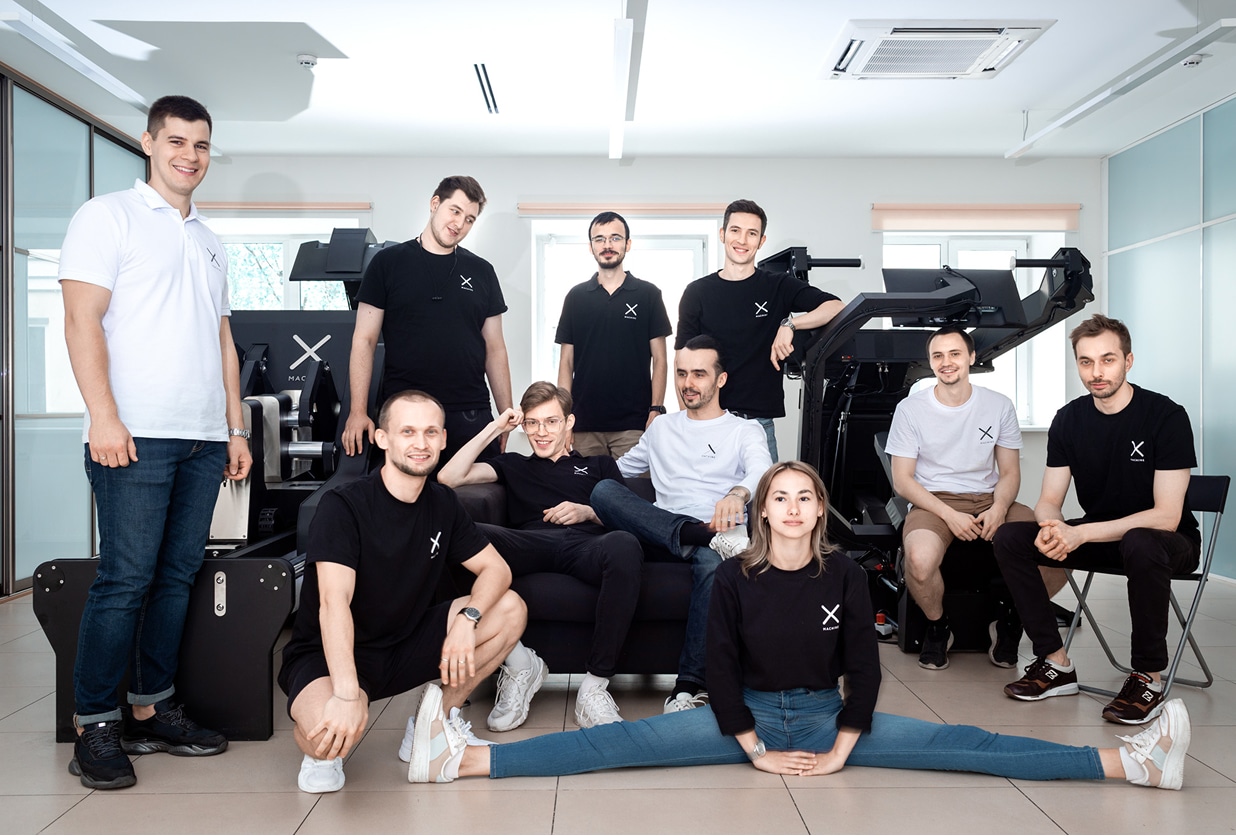
As Team Lead of the engineering team I was responsible for processes, task distribution and strategic planning. The team grew with the product, and one of my jobs was making sure engineers could work in parallel on different sub-assemblies without losing structural integrity. Separately I owned the sync with the electronics team — I built the workflow so mechanical and electronic decisions met during design, not at final assembly.
Results
With my involvement X Machine went from one device to a line of three and opened its own commercial gym in Moscow. People came, paid for sessions and gave feedback — most of them came away with a strong impression because training on X Machine feels noticeably different from a regular gym.
What I took away from this project
X Machine was the moment I realised I want to work at the intersection of hardware and software. Launching a serial line and leading an engineering team at the same time taught me to hold both the macro picture — product strategy, roadmap, team — and a single micro detail — one joint, one load case — in the same head. The main lesson: in a real hardware product, mechanics, electronics and software have to converge during design, not at final assembly. And the team is part of the product just as much as the device itself.