Designing and manufacturing interior air recirculators
From idea to mass production at the peak of the pandemic
Context
March 2020. Lockdown, panic, a shortage of protective equipment. I didn't want to sit on my hands and decided to apply my skills where they were needed right now. That's how I joined a startup as Product Owner — the task: design and ship into production an air-recirculation device for residential and commercial spaces.

SunnyTazer
Role: Product owner, Industrial designer, engineer Product: a line of interior air purifiers Scope: Ideas, sketches, design, prototyping, production launch, optimisation and QC, iterative approach, packaging
Problem
UV recirculators already existed on the market, but almost all were medical: huge metal boxes built for hospitals and clinics. In a residential apartment, restaurant or office such a device looked foreign and people simply didn't buy them for home. We saw a niche — a recirculator that works like a medical one but looks like part of the interior.

Idea
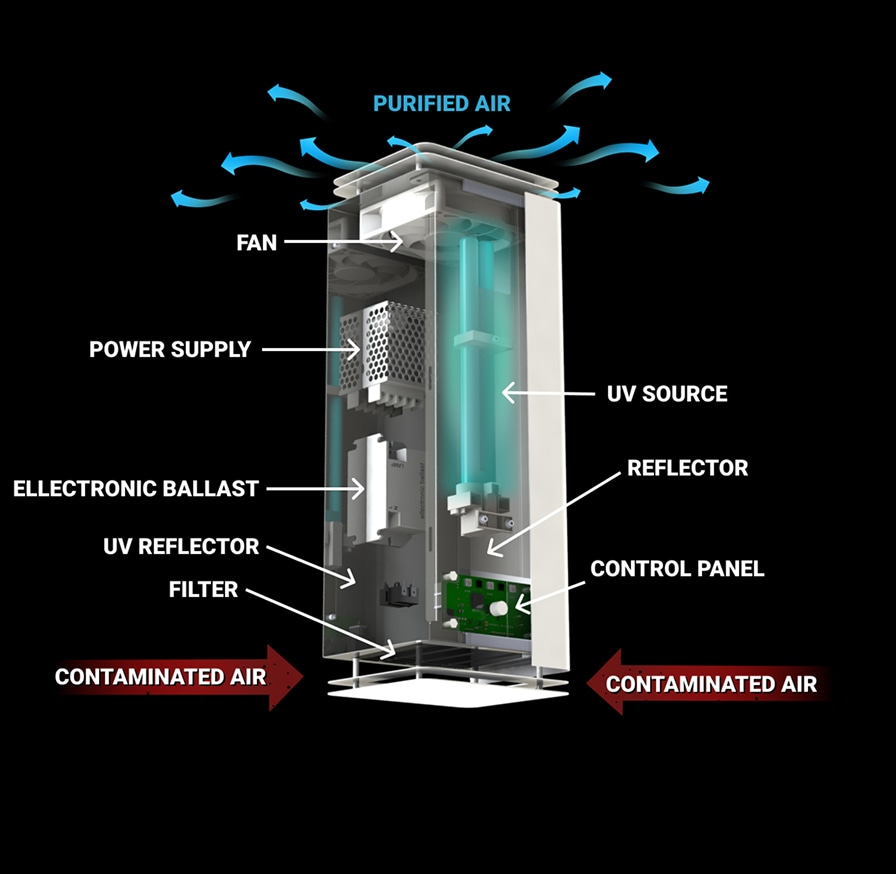
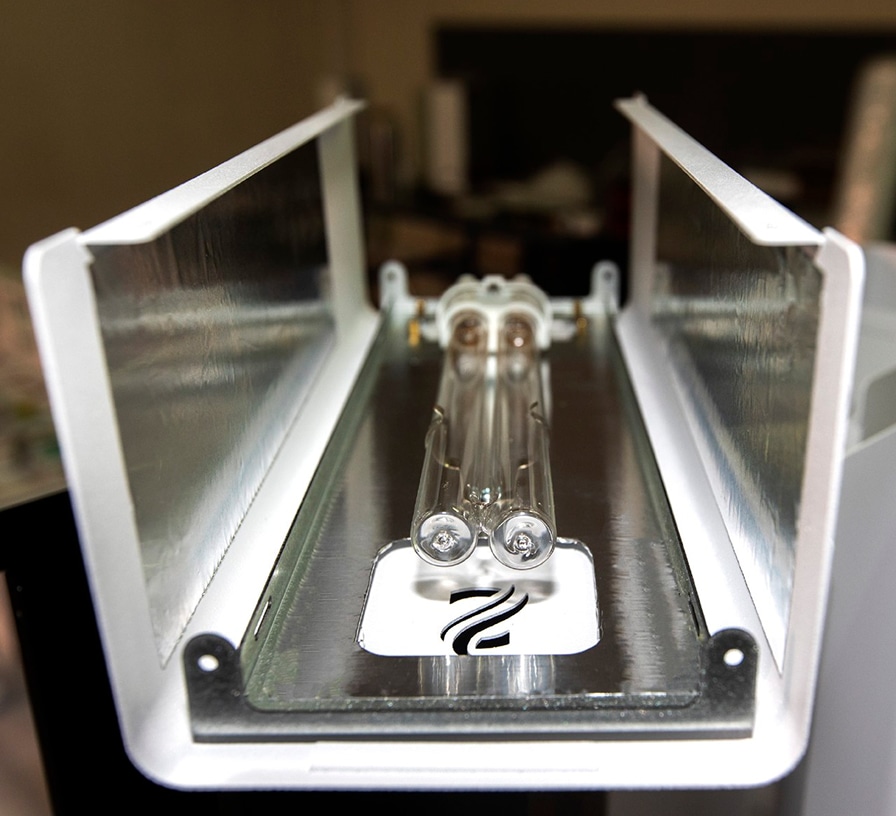
A consumer device with UV air disinfection. A sealed chamber with a UV lamp, a fan drives air through the irradiation zone, the output is a disinfected stream. No exposed UV — safe to run around people.
Research and calculations
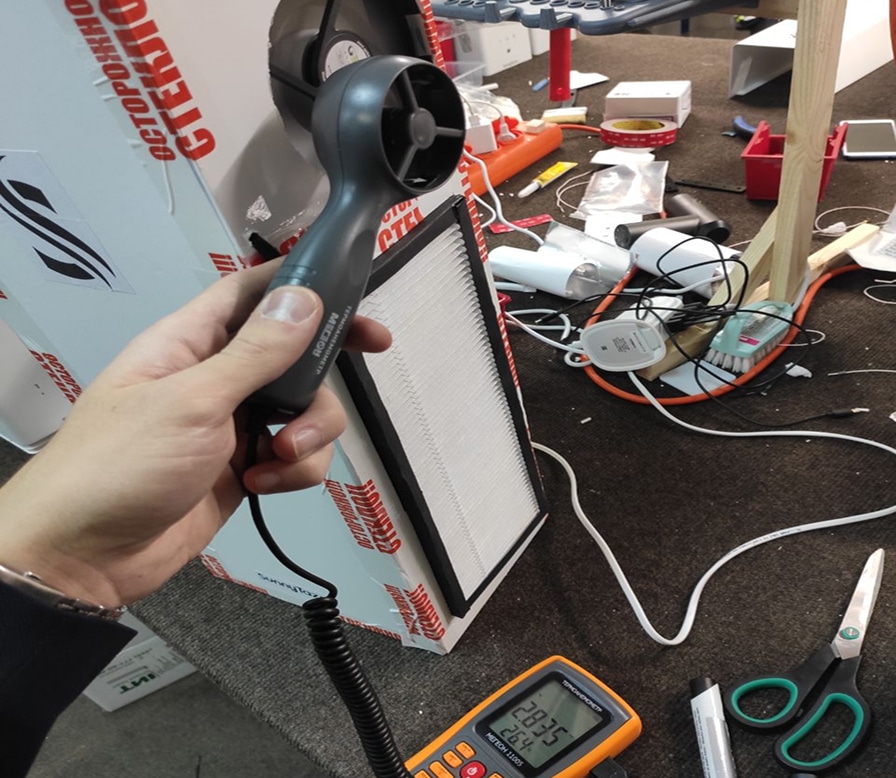
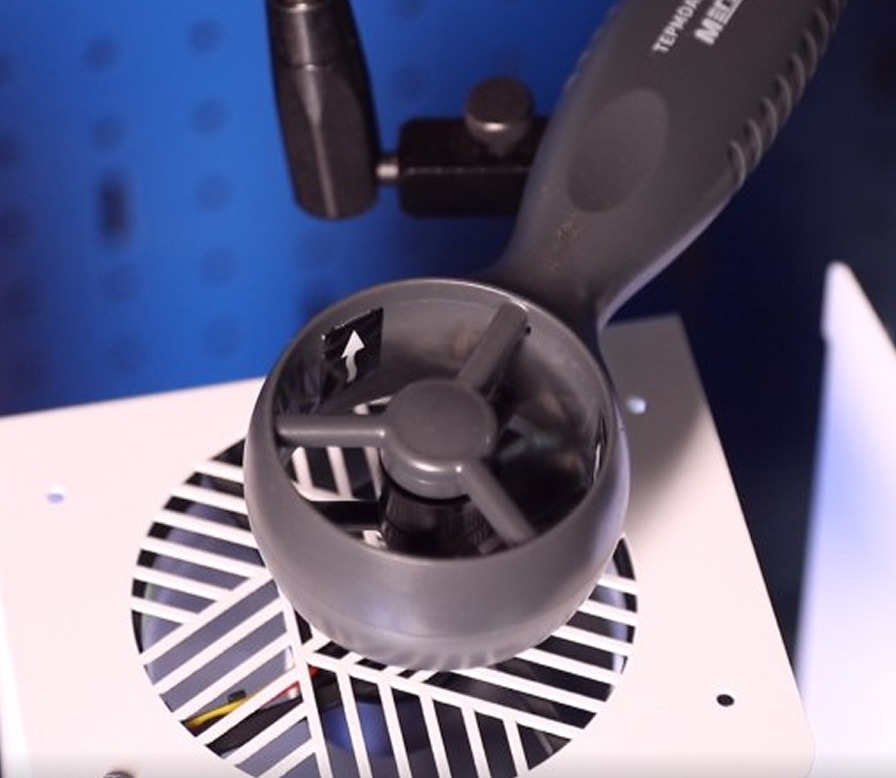
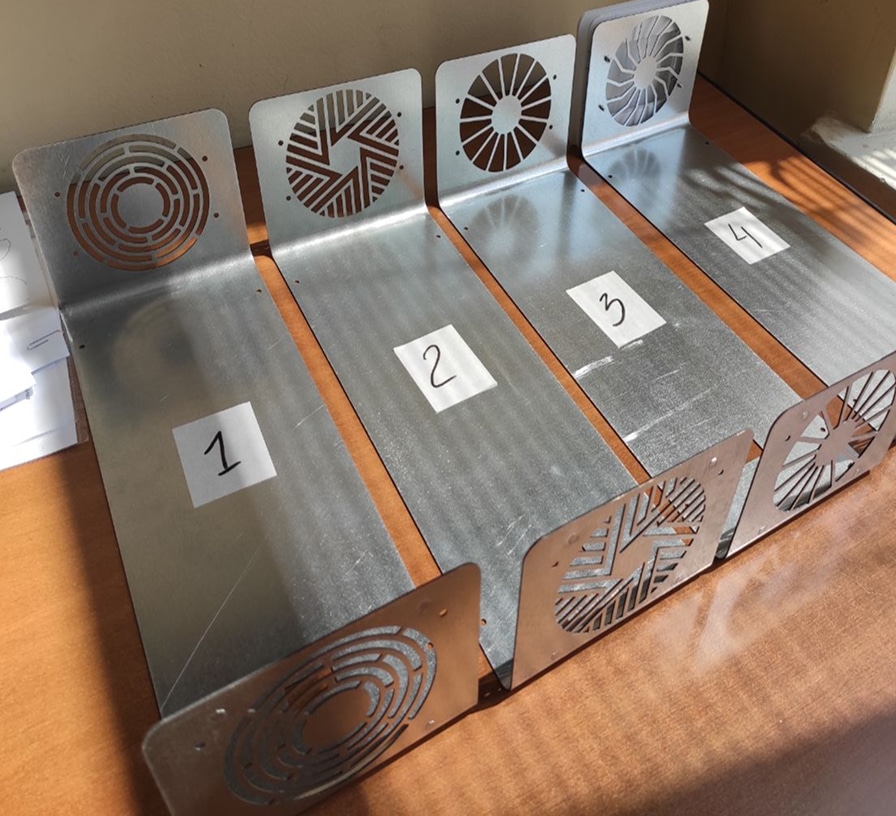
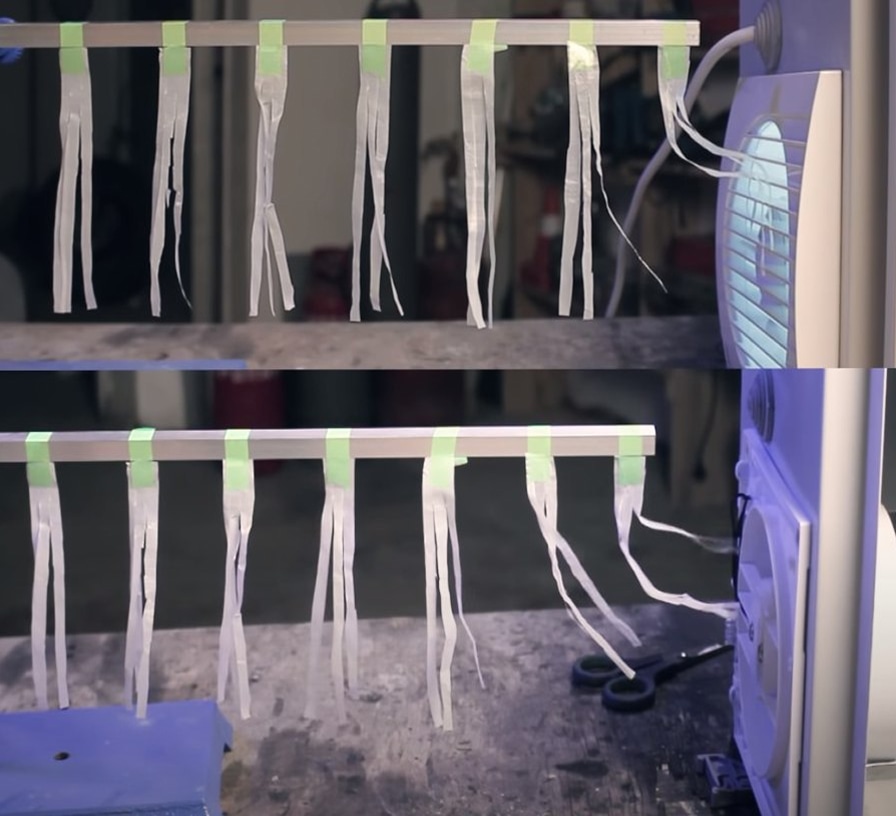
Before sketching a body, we worked out the physics. Analysed the market, studied papers on UV disinfection, picked the lamp type and components. The key equation to solve: air must pass through the chamber slowly enough for UV to kill the microorganisms, but quickly enough for the device to serve a meaningful room volume. That turned out to be one of the project's hardest problems. We had to converge on four parameters at once: air-channel cross-section, filter resistance, fan power, and noise level (a consumer device can't hum). We derived a formula linking lamp power, irradiation-chamber length, cross-section and fan throughput. Target airflow ≈ 3 m/s. Then long hours of in-hardware measurement: an anemometer for real flow at different cross-sections, with and without filter, on different fans. We ordered bodies with various perforation patterns, tried different filters, swapped fans. After many test cycles we found the working combination — the sweet spot where all four parameters converge.
Development
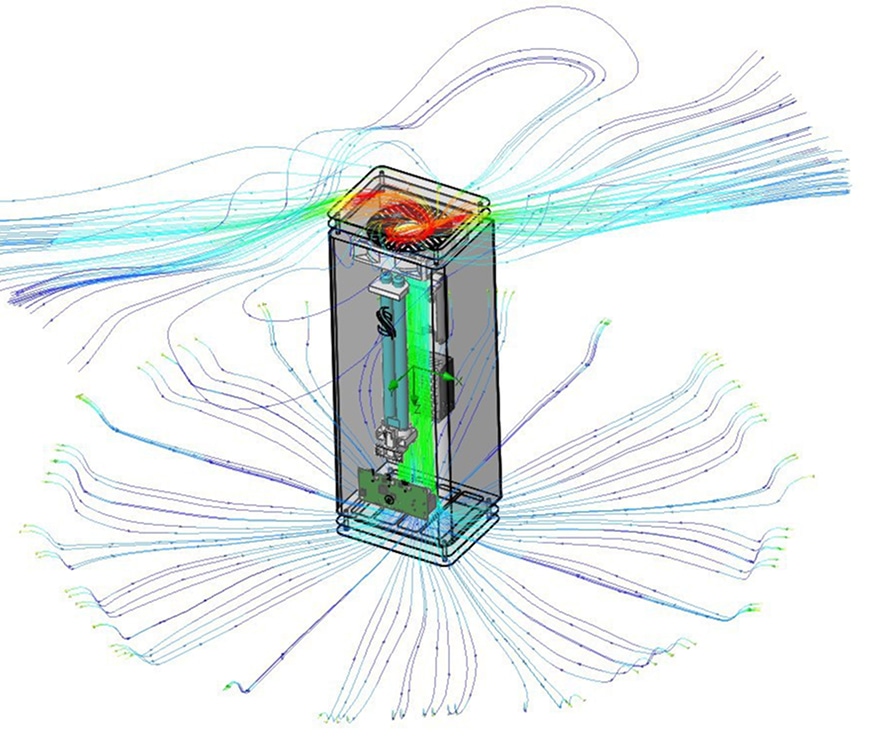
All modelling and calculations in SolidWorks: 3D body model, component layout, CFD analysis of airflows.
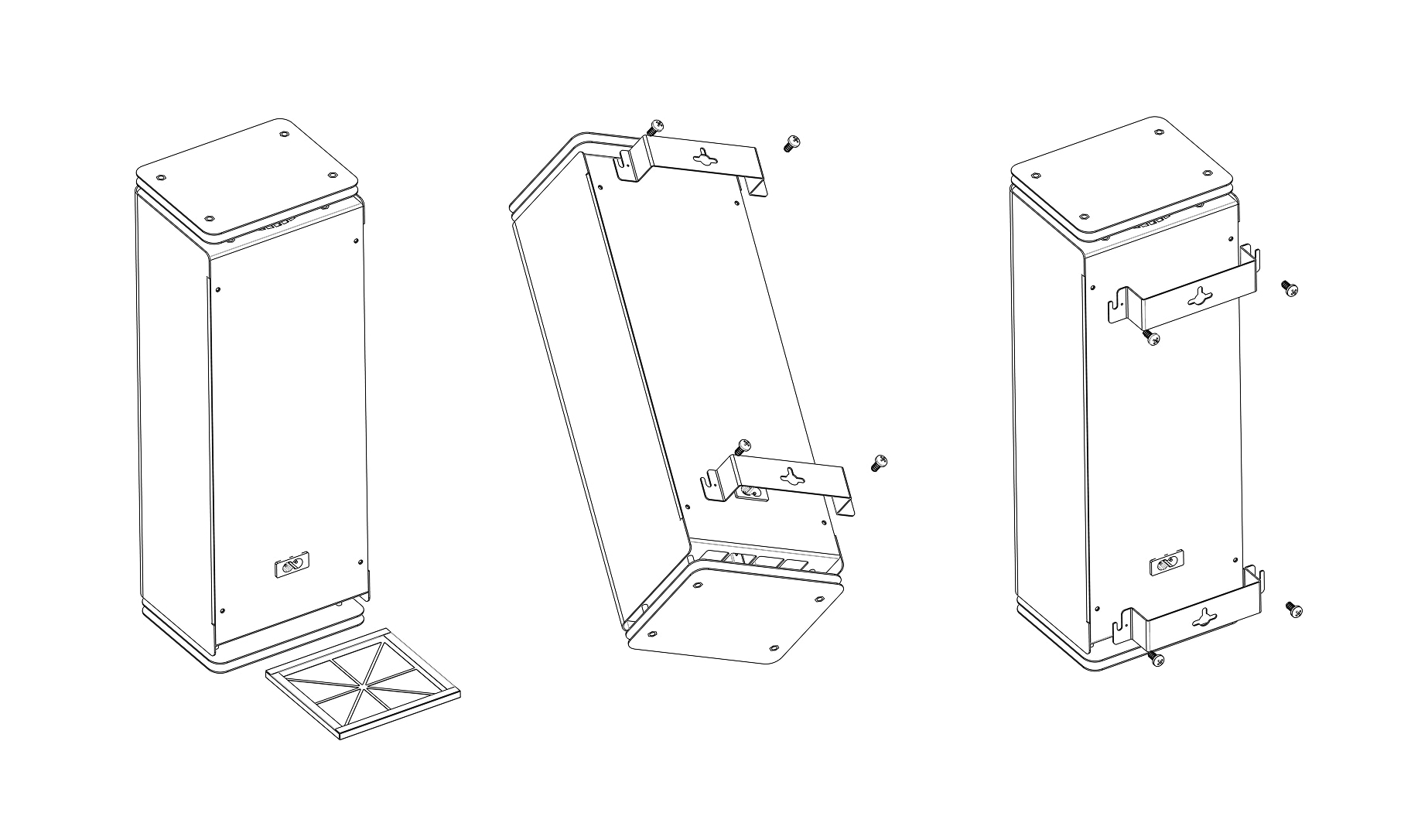
We went through ~20 prototype iterations before arriving at the master model that went into the first 200-unit run. Each iteration meant reshuffling the layout, flow tests, noise tests, assembly tests.
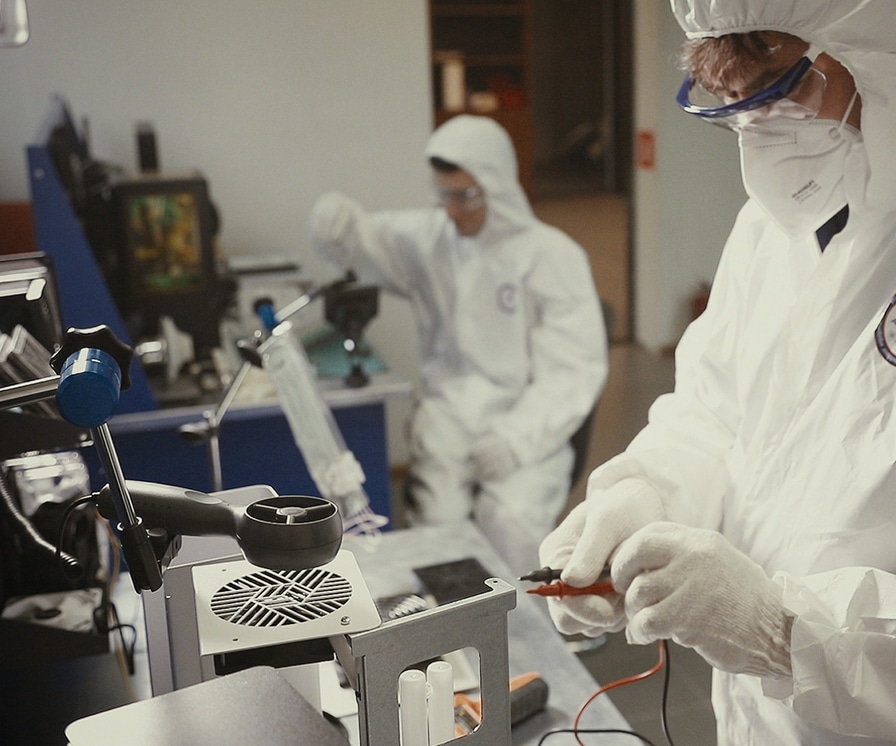
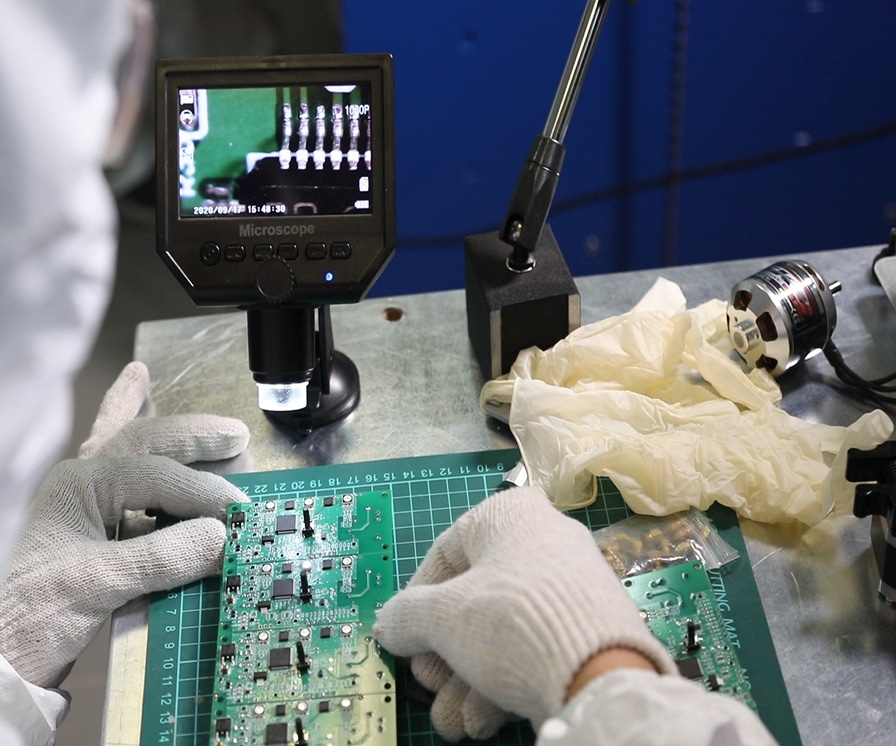
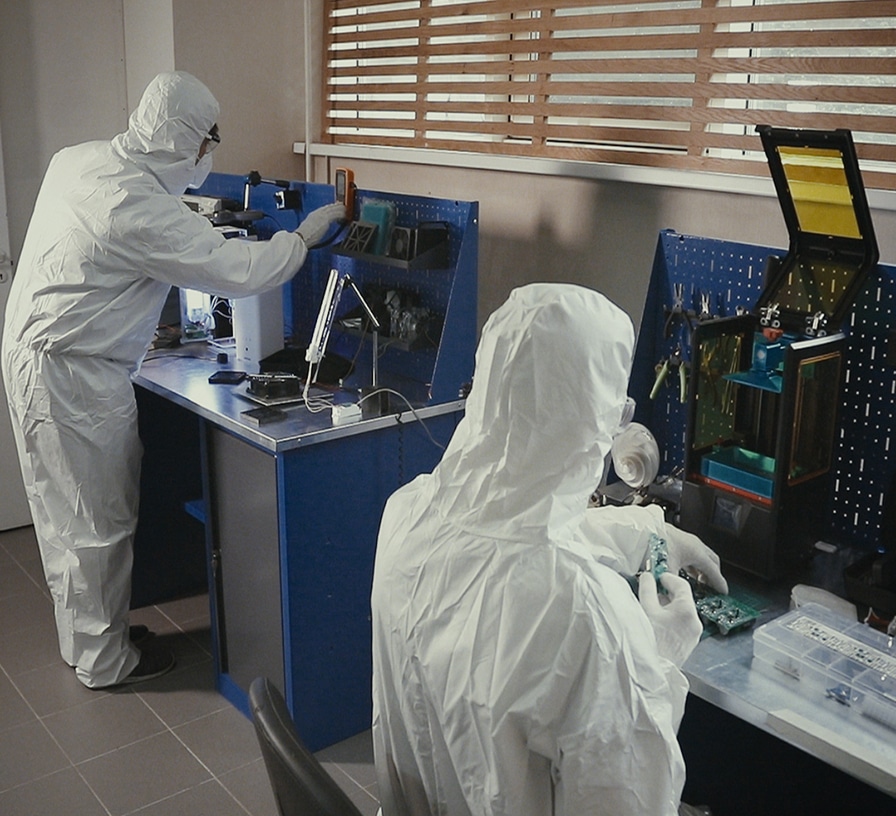
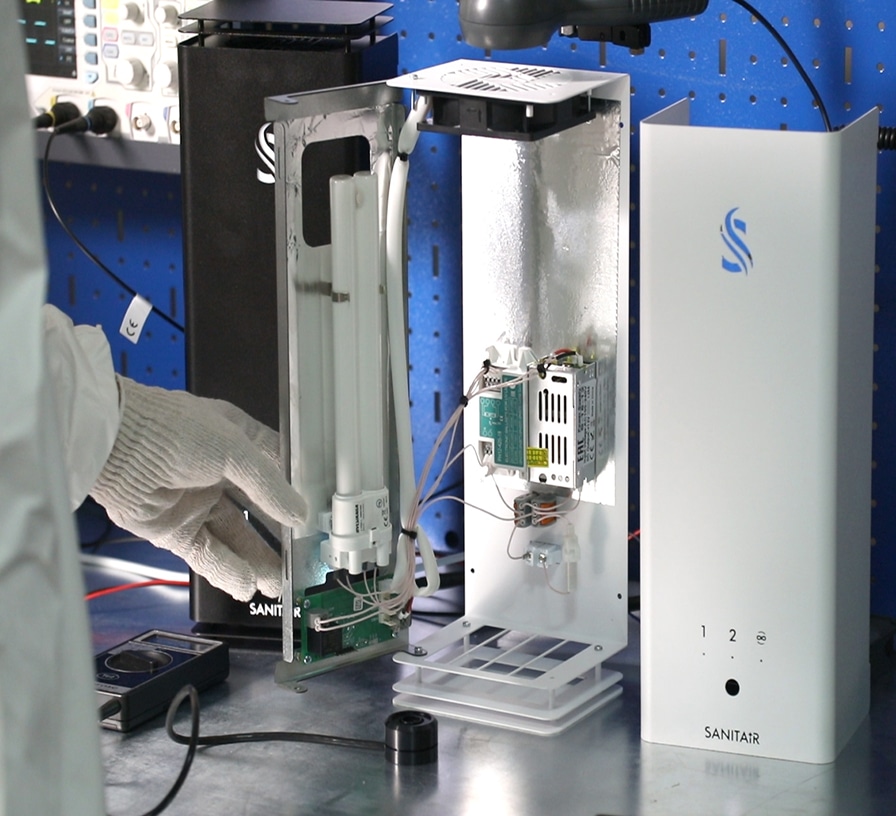
Manufacturing
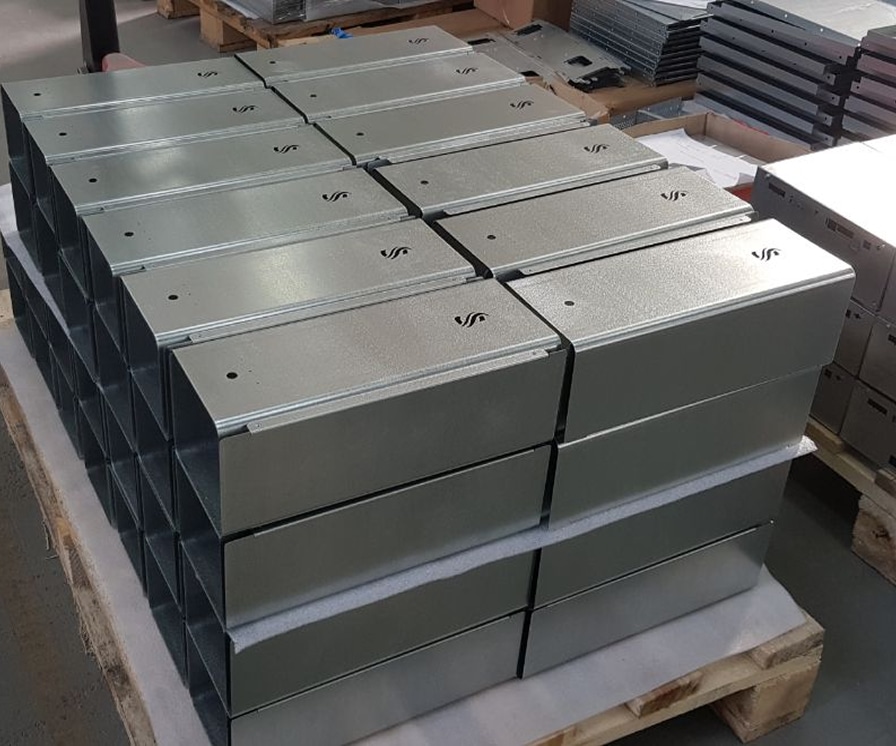
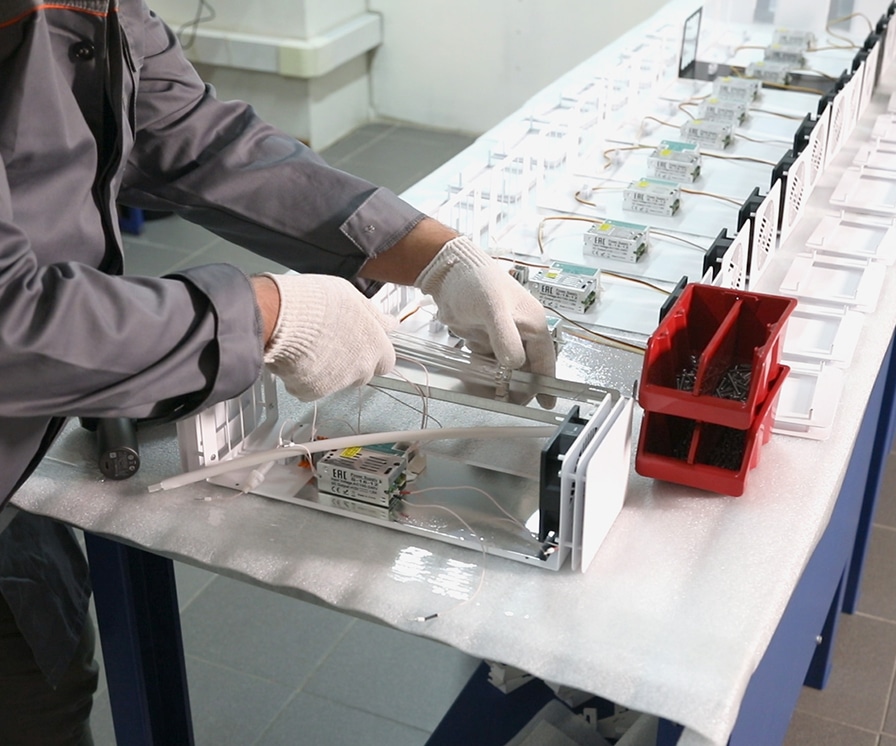
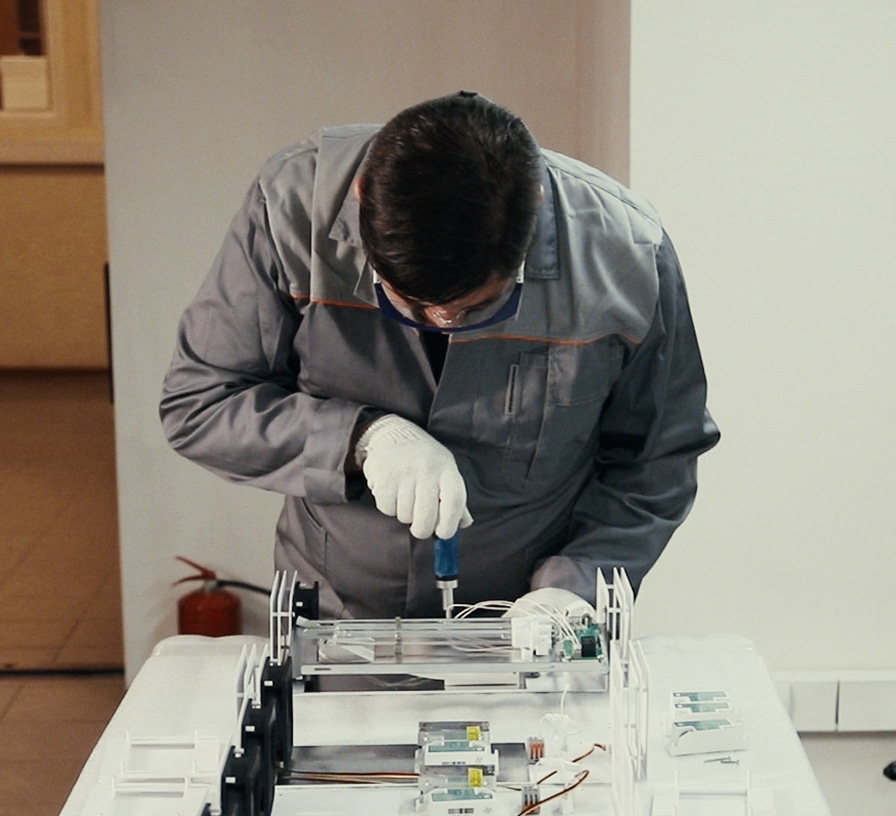
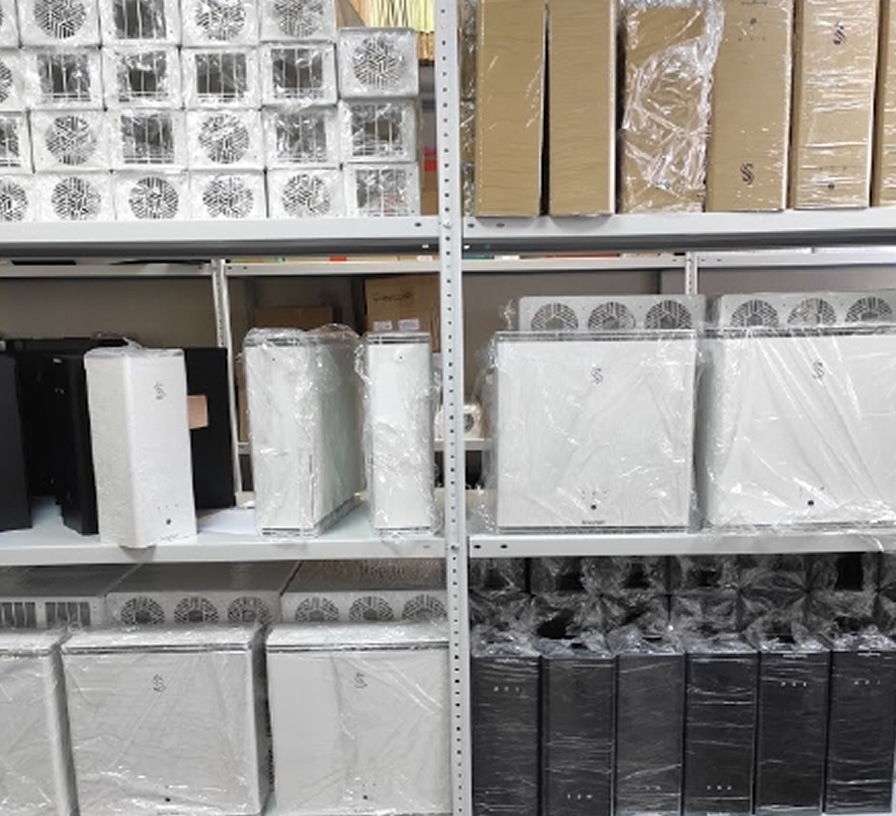
We sourced components in China; I personally took part in supplier selection and negotiations. Finding bodies took a while — the bar was strict: a winning balance of price, quality and lead time at production volume. A few contractors dropped off; eventually we built a working supply chain. The assembly shop we set up ourselves: I designed the line, the QC system, the operator training. From components on the shelf to a finished device on a pallet.
Model line
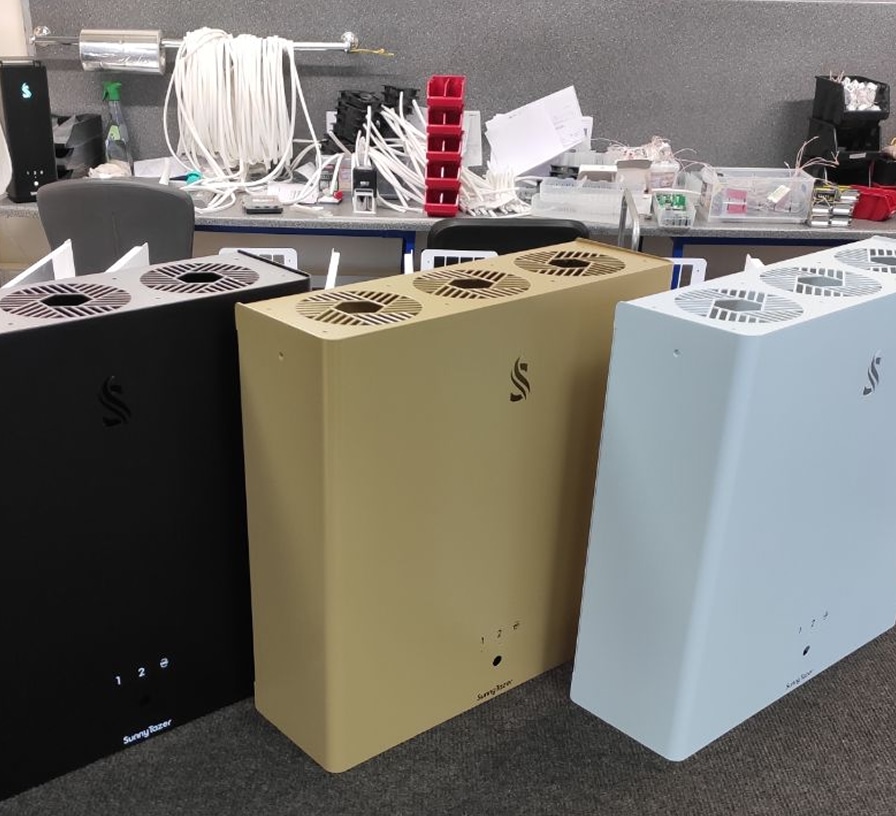
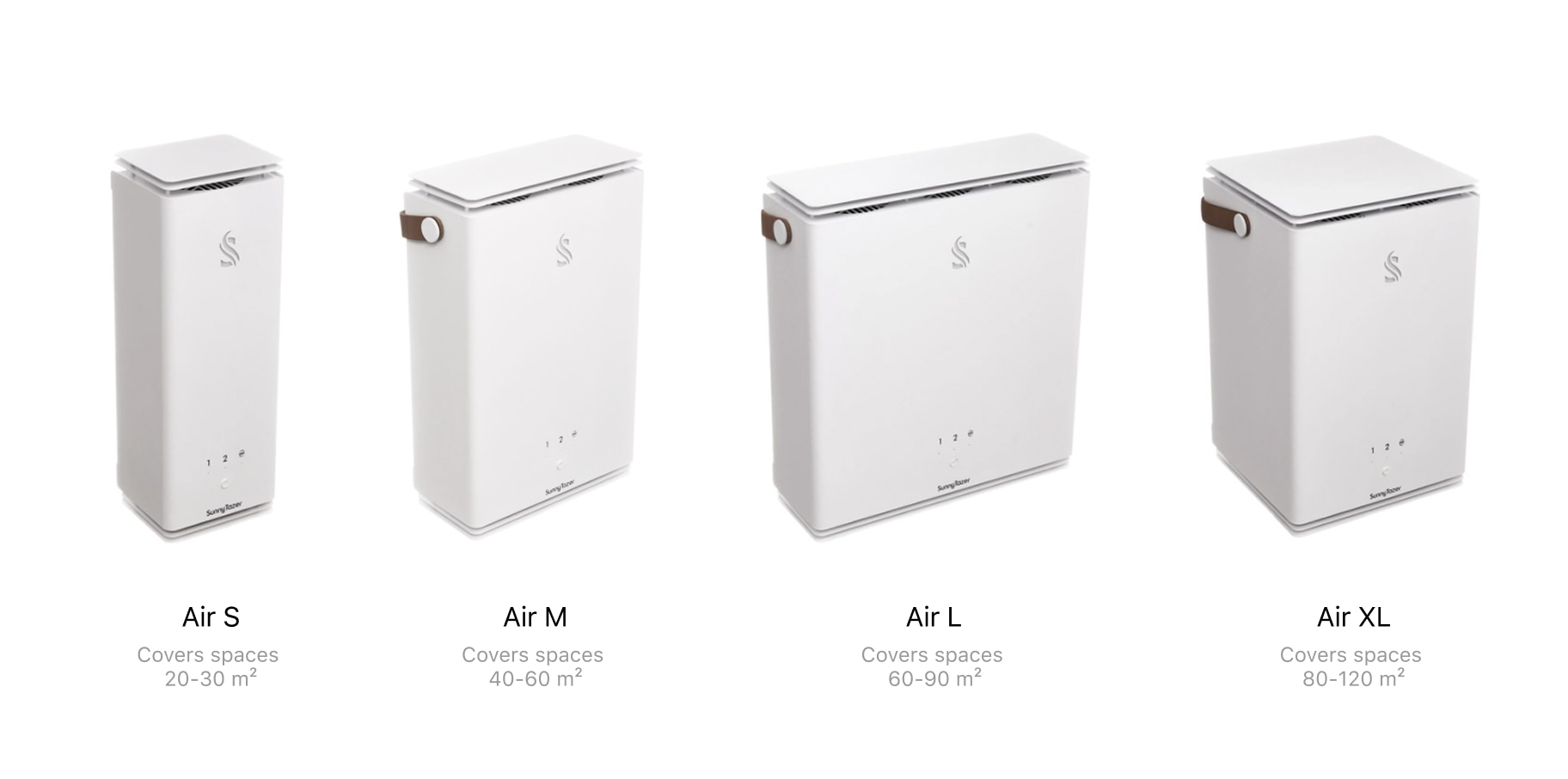
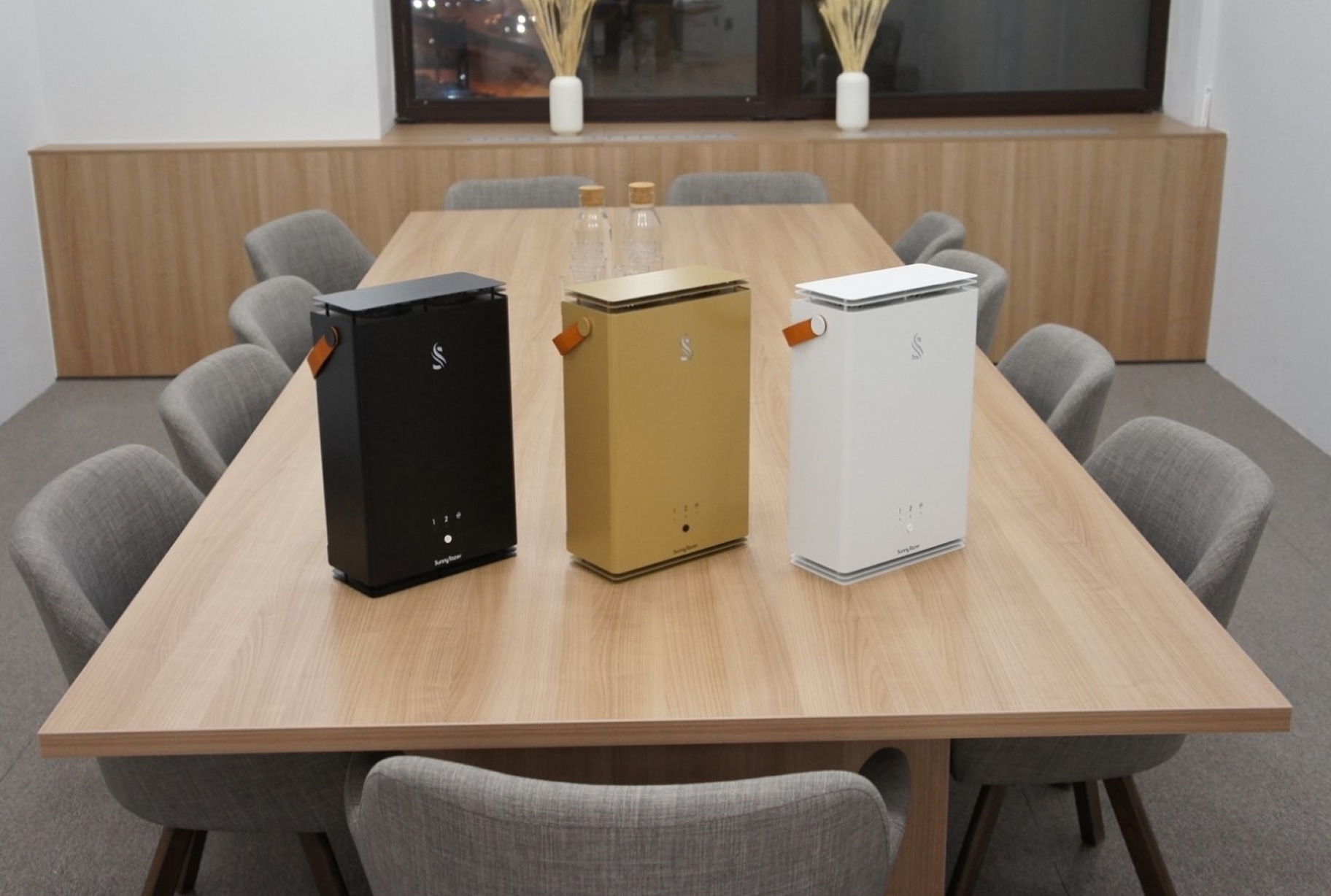
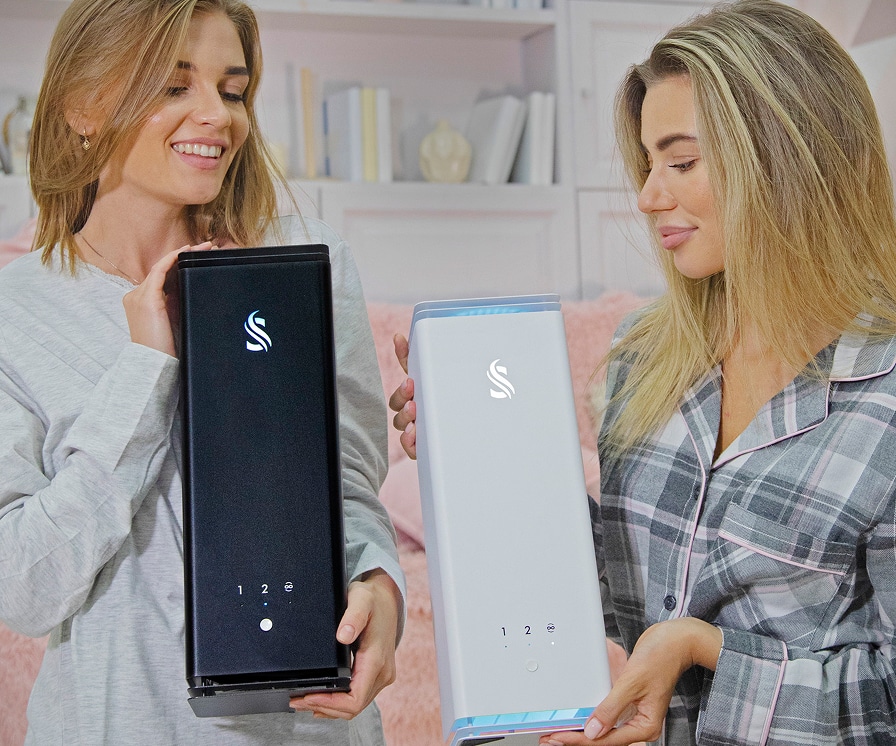
Four models for different room sizes: S, M, L, XL — from a small room to a hall. Three colours: white, bronze, black — to fit any interior.
Packaging
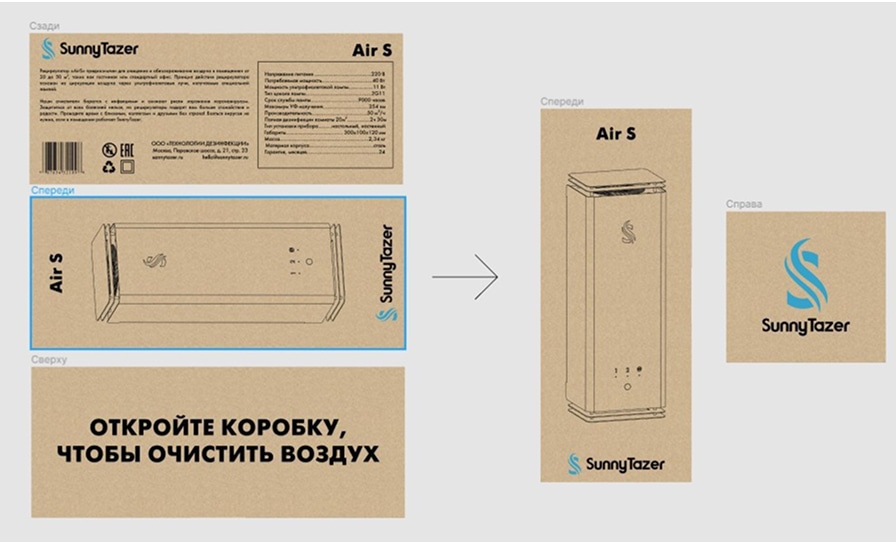
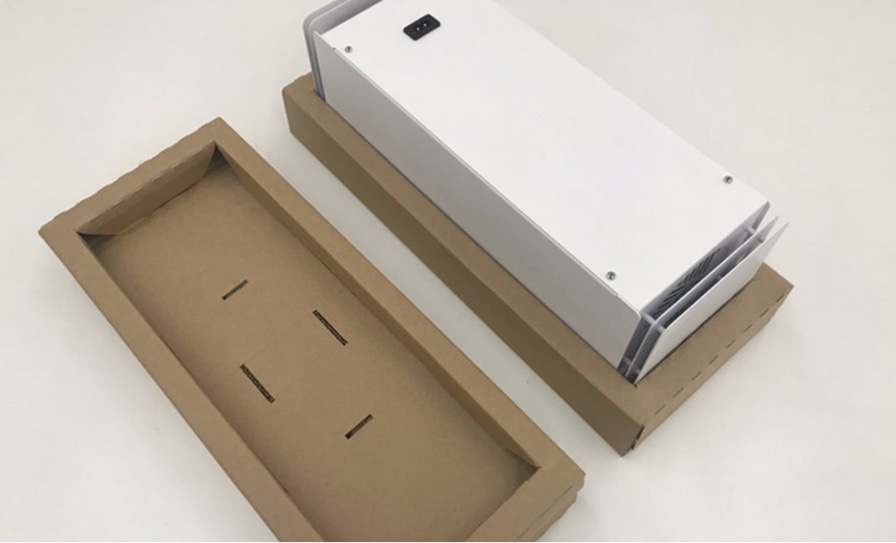
I designed separate packaging for each model — accounting for dimensions, shipping protection, and the unboxing experience. The box had to work on a warehouse shelf, on a marketplace listing, and in the customer's hands.
In interiors
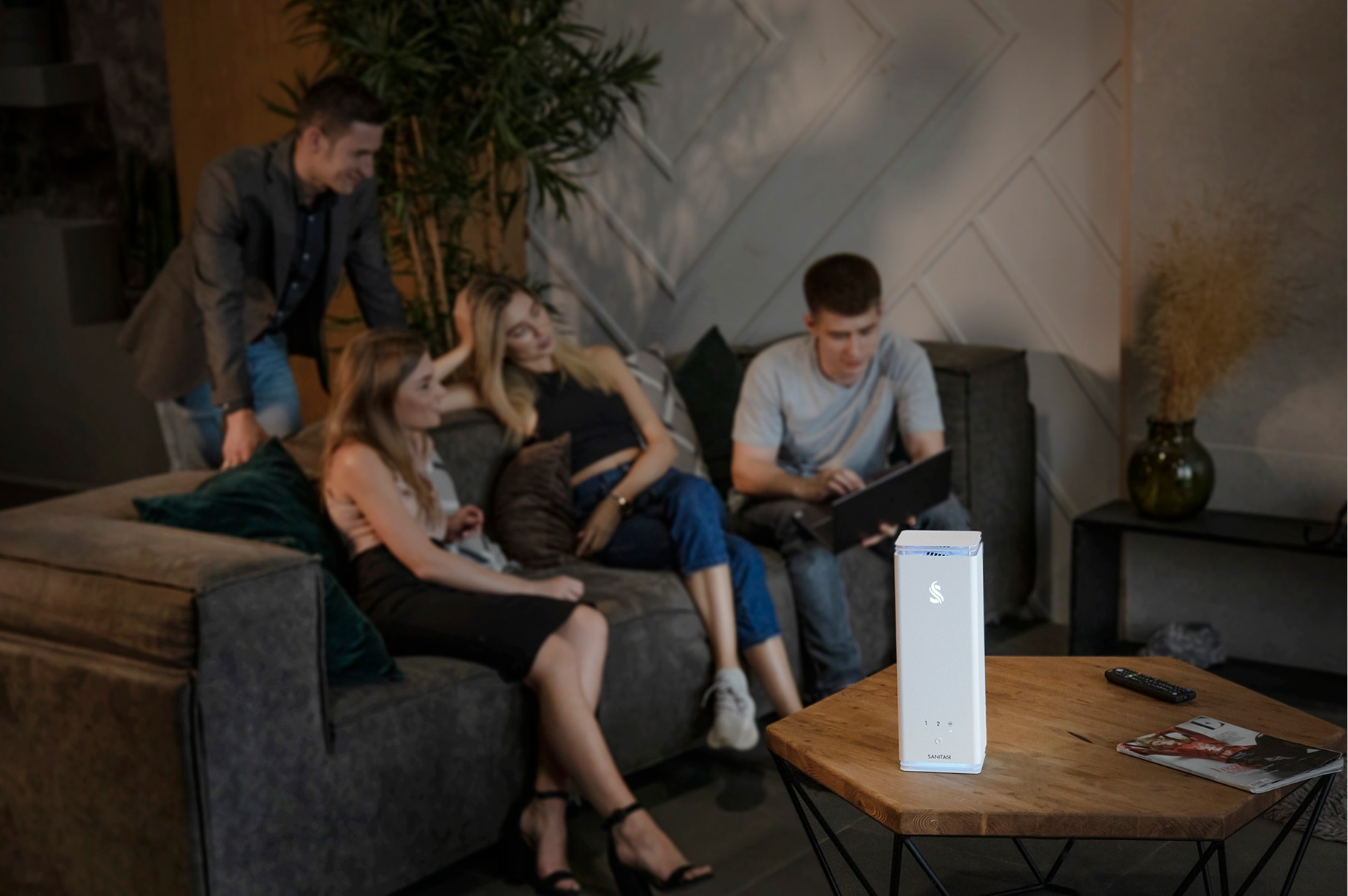
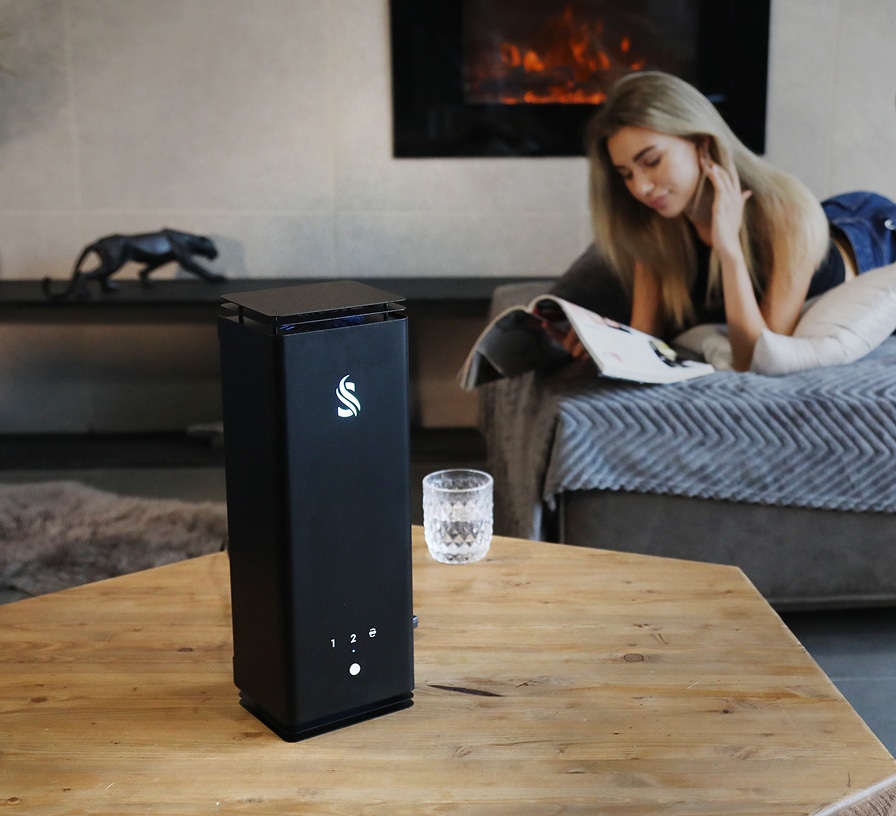
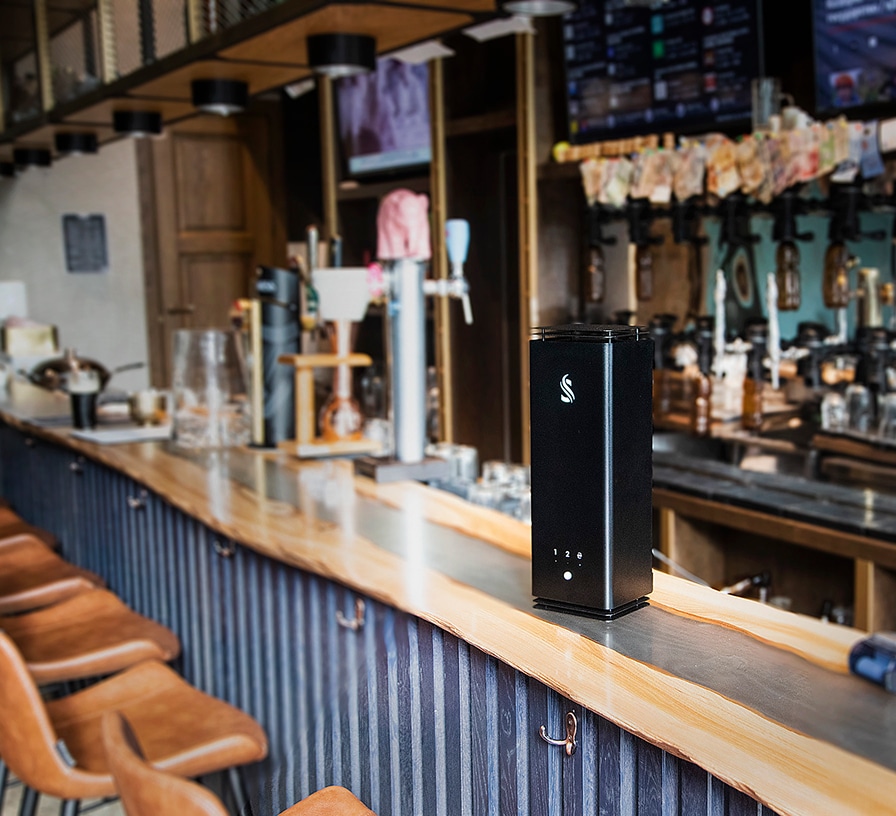
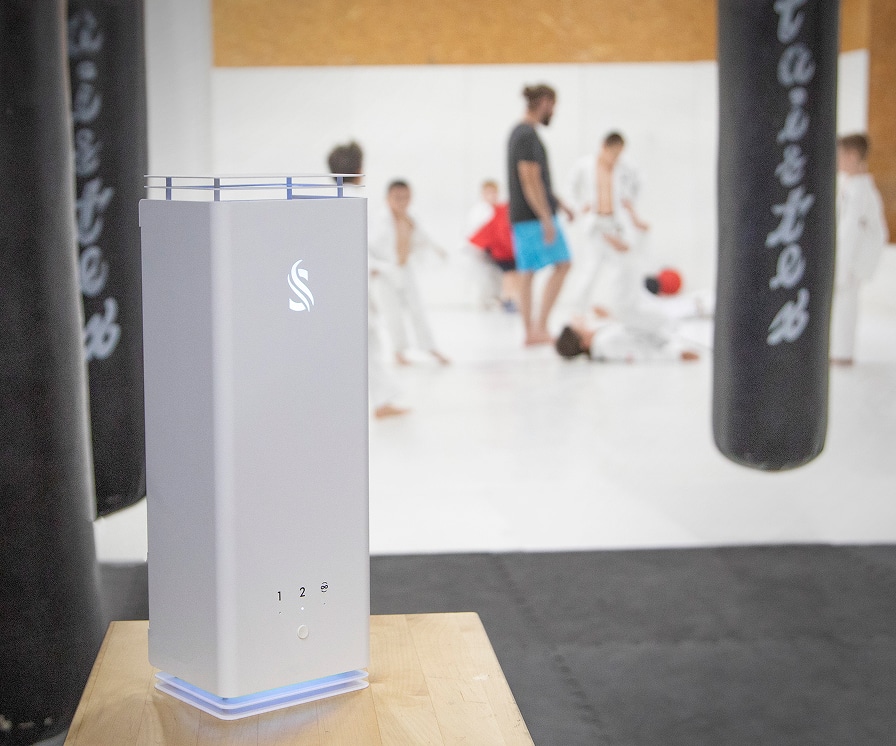
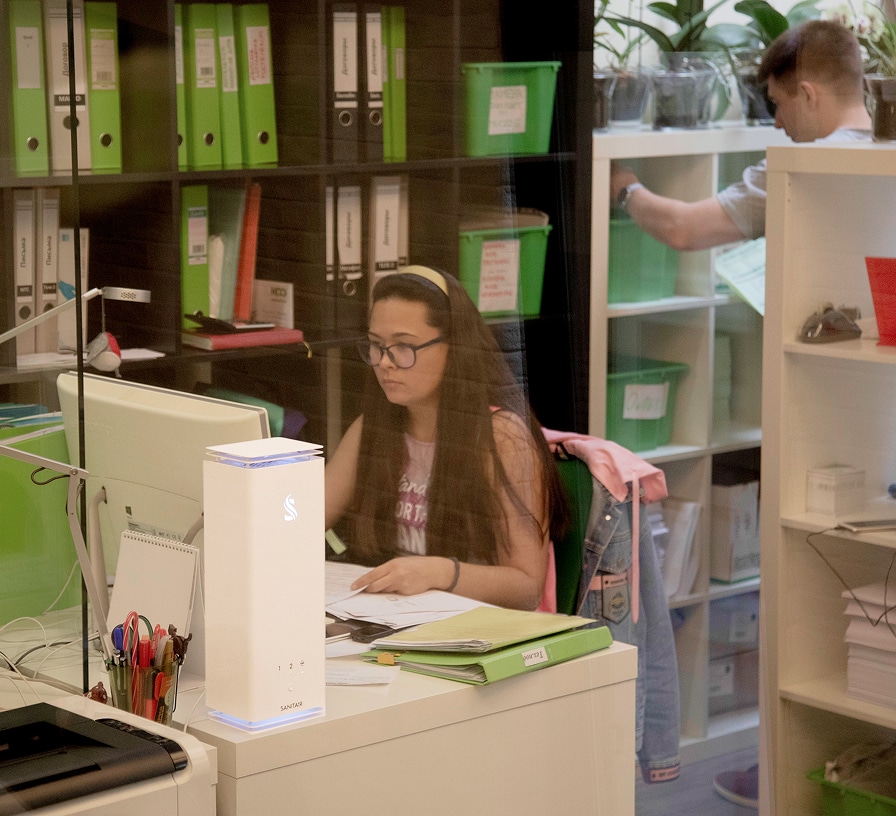
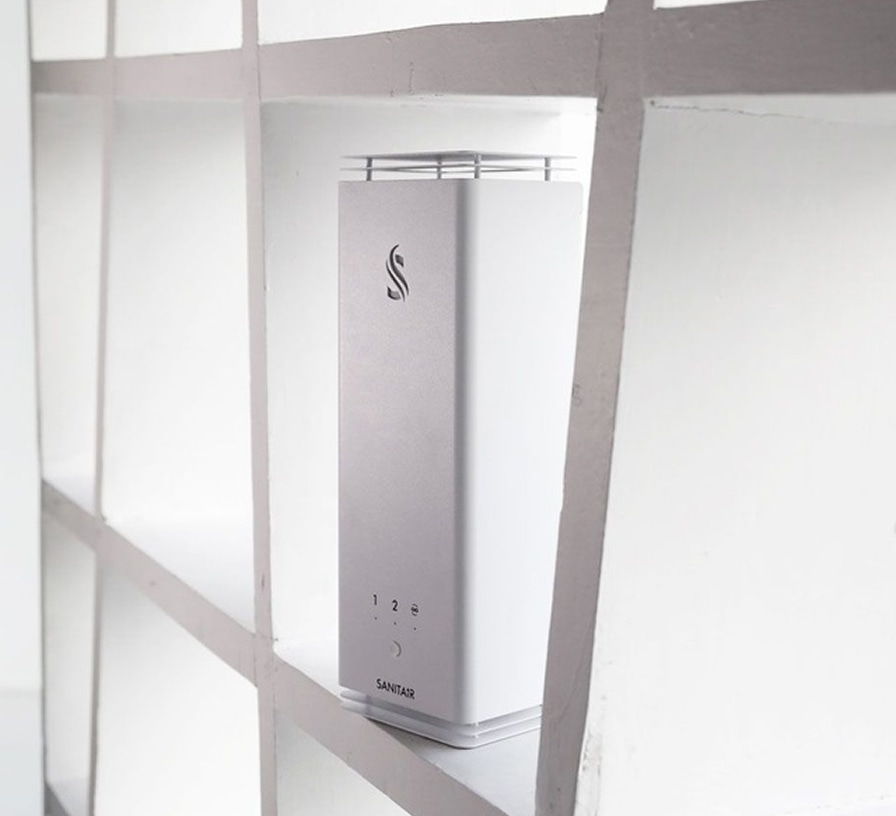
Home, restaurant, office, gym — the device was conceived as a universal object, and that worked out. The photos show how it fits into different spaces without feeling like a 'medical instrument'.
Results
The first production run shipped at the peak of the pandemic. Sales ran through marketplaces and our own site.
~20
prototype iterations to master model
4
models in the line S / M / L / XL
3
colourways in the range
1–3K
units per month at scale
What I took away from this project
I'd launched physical products before, but the scale here was different — my first mass-market series. Every link in the chain worked under that pressure. R&D was intense but short — the pandemic didn't leave time for long paper iterations; decisions were made fast and immediately tested in hardware. Sales turned out to be the hardest part — building a funnel via marketplaces and our own site, sorting out unit economics, logistics, returns, reviews. A different discipline, and I had to learn it on the fly. What I took with me: — R&D under deadline pressure — how to hold engineering quality when there's no time for ten approaches. — Mass-market manufacturing — sourcing contractors in China, setting up assembly, QC at thousands-of-units volume. — Sales and unit economics — marketplaces, websites, what 'a product that actually sells' really means. The main lesson: in mass market the hardest part isn't making the product — it's selling it. Engineering and manufacturing are solvable with a team and suppliers. Sales at volume is a separate product inside the product, and it needs as much attention as the device itself.